The interleukin -5 receptor α subunit (IL5R) is a cell surface receptor that plays an important role in the survival, differentiation, and chemotaxis of eosinophils. IL5R exerts its function by forming a heterodimer receptor with the CSF2RB subunit and subsequently binding to interleukin-5. Under unstimulated conditions, it forms a heterodimer receptor with JAK2. Activation of the heterodimer receptor leads to JAK2 stimulation and subsequent activation of the JAK-STAT pathway.
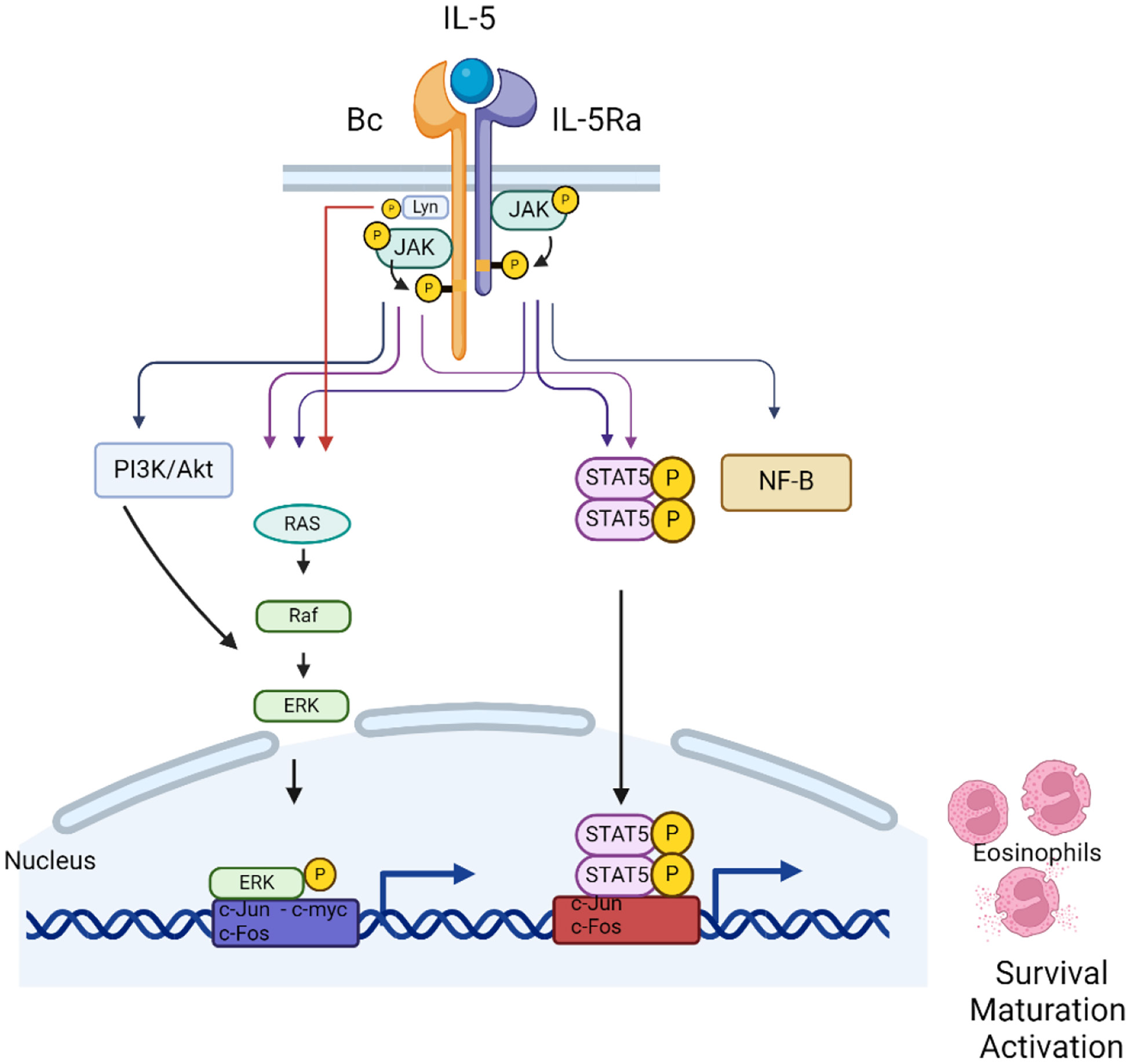
(Data source: AbuJabal R, et al. Clin Exp Allergy. 2024)
IL5R expression distribution
IL5R is mainly expressed in ciliated cells, eosinophils, mast cells, plasma cells, and spermatogenic cells. It is also expressed in neutrophils, B cells, NK cells, and glial cells.
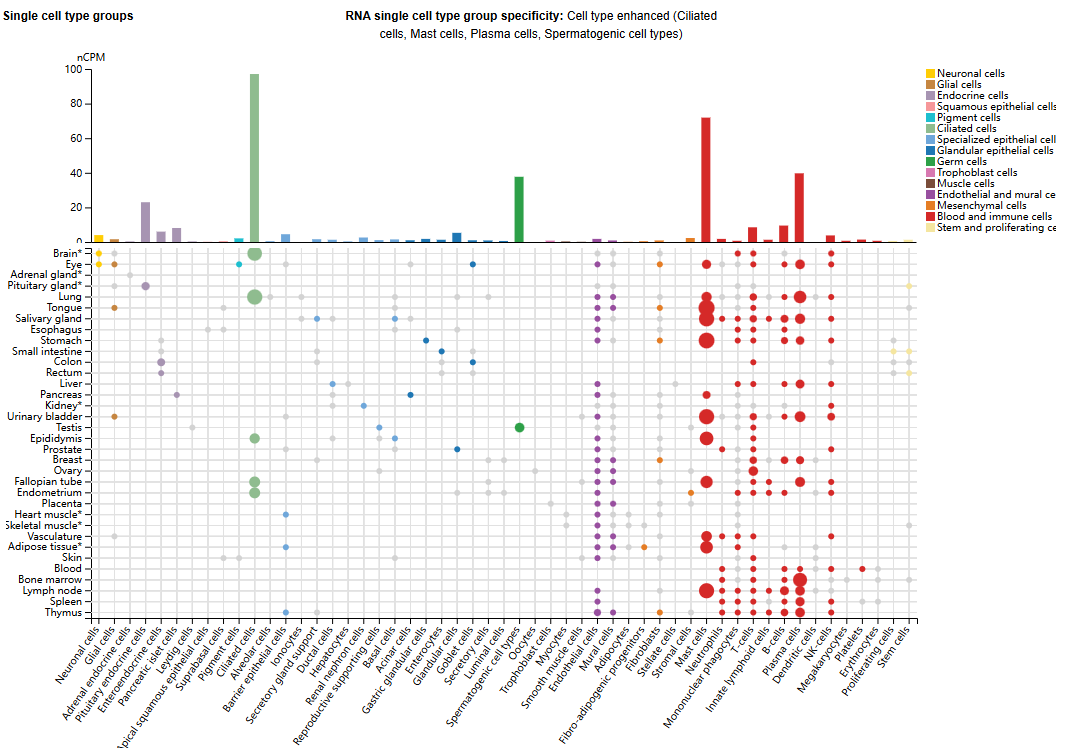
(Data source: uniprot)
IL5R structure
IL5R is a transmembrane protein composed of 420 amino acids, containing an extracellular ligand-binding domain (responsible for high-affinity binding of IL-5), a transmembrane domain, and an intracellular short tail. Its structural features determine the specificity of IL-5 signaling. IL-5RA specifically recognizes and binds to IL-5 ligands. The extracellular region consists of approximately 322 amino acid residues, including three FnIII (type III fibronectin) domains. When IL-5 binds to IL-5RA, the three FnIII domains of the receptor wrap around the ligand like a wrench around a nut, significantly increasing the interaction surface area between the receptor and ligand.
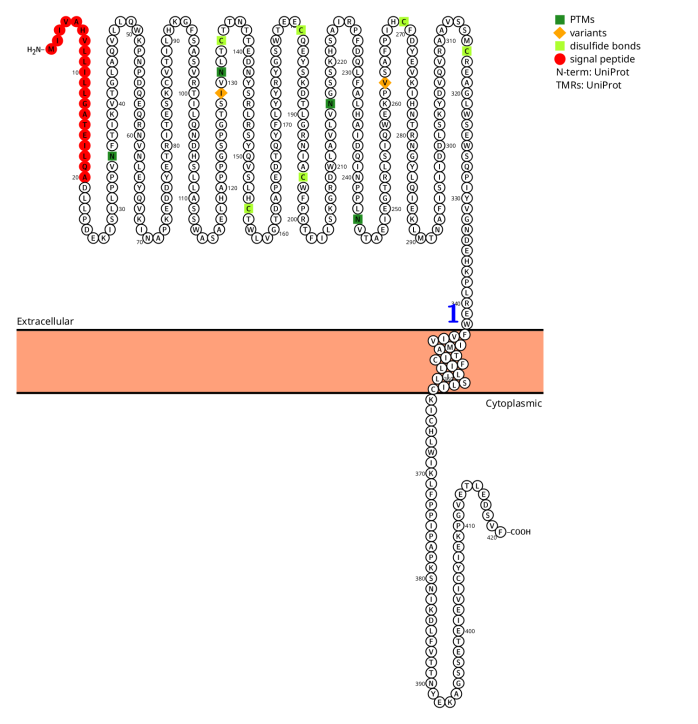
(Data source: protter)
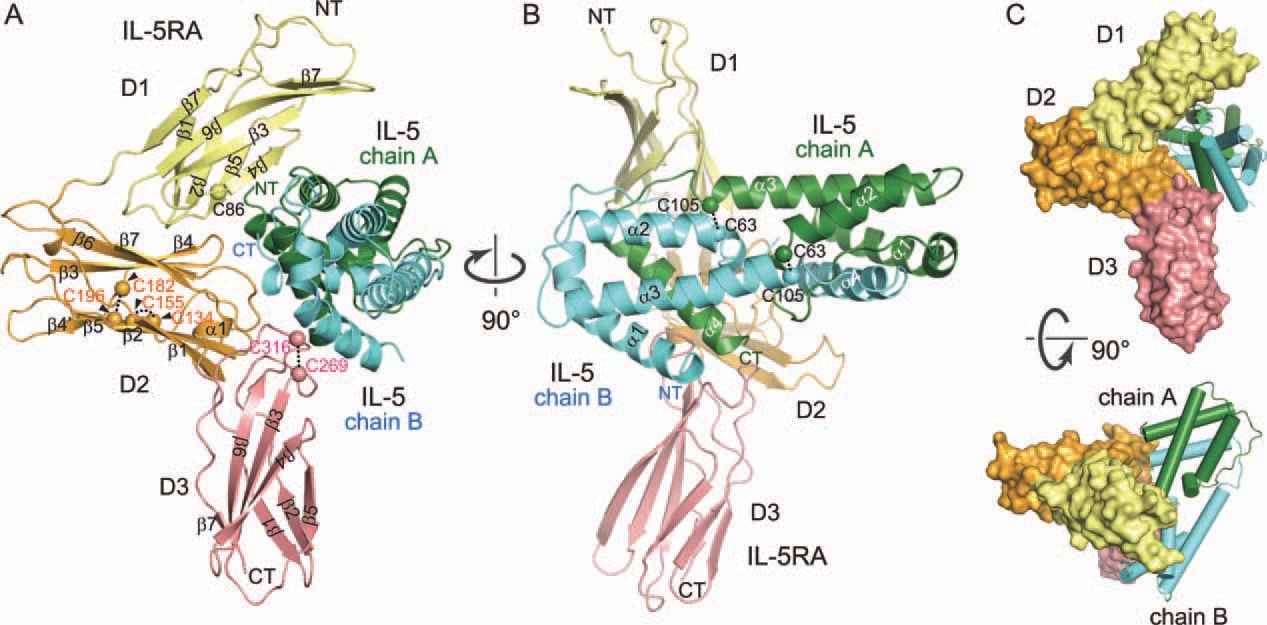
(Data source: Kusano S, et al. Protein Sci. 2012)
Targeted therapy for IL5R
Benralizumab (KHK4563) is a humanized glycosylation-deficient monoclonal antibody (IgG1, kappa) against eosinophils that specifically binds to the α subunit of human IL-5R (IL-5Rα) expressed on eosinophils and mast cells. Due to the lack of fucose in its second heavy chain constant region, Benralizumab also exhibits high specificity for the FcγRIIIa receptor on natural killer cells. Therefore, Benralizumab can enhance antibody-dependent cell-mediated cytotoxicity, label eosinophils for natural killer cell-induced apoptosis, and reduce eosinophilic inflammation without releasing inflammatory mediators.
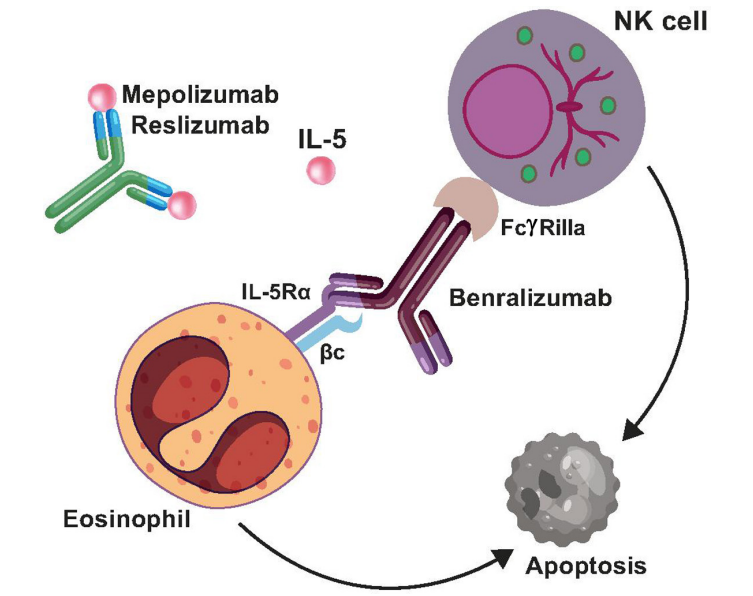
(Data source: Jackson DJ, et al. Allergy. 2024)
NCT04191304 (NATRON) was a randomized, placebo-controlled phase III trial evaluating the efficacy and safety of benralizumab in FIP1L1:PDGFRA-negative hemorrhages (HES). The primary endpoint was time to first HES exacerbation. A total of 133 patients (median age 51 years, range 14–87 years, 62% female) were randomized (1:1) to receive benralizumab 30 mg every 4 weeks or placebo for 24 weeks, while receiving background therapy. Compared with placebo, benralizumab significantly reduced the risk of first exacerbation (hazard ratio 0.35, 95% CI 0.18 to 0.69, P=0.0024). Adverse events occurred in 64.2% and 66.7% of patients receiving benralizumab and placebo, respectively. The safety profile of benralizumab was consistent with its known characteristics. These results demonstrate the efficacy and safety of benralizumab as adjunctive therapy in the treatment of HES.
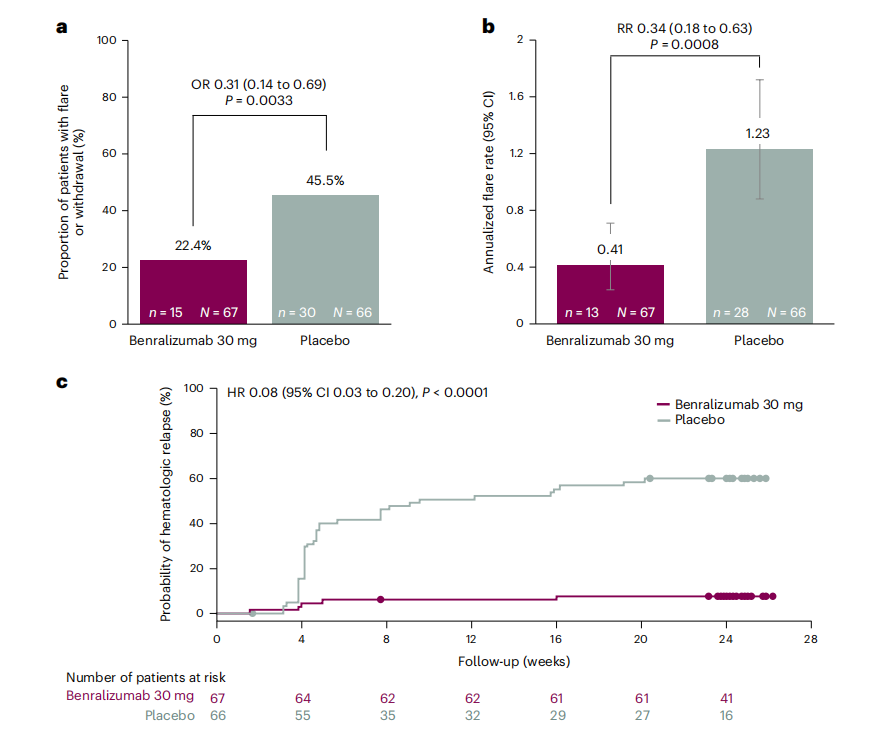
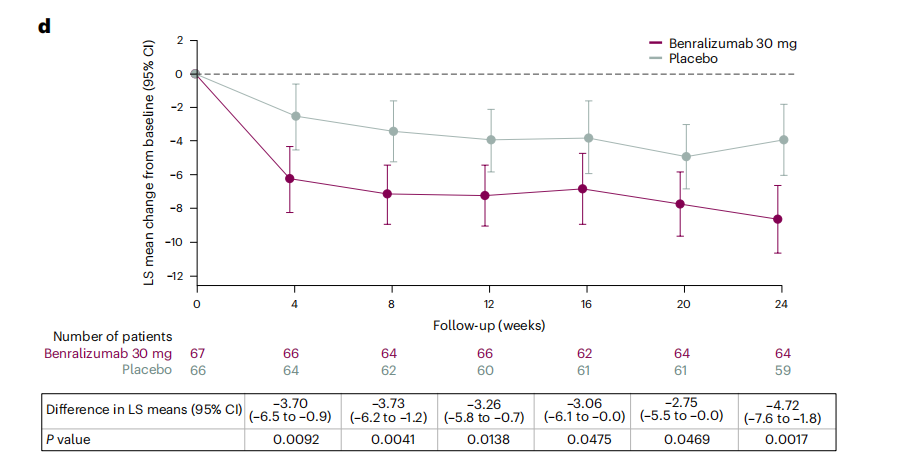
(Data source: Ogbogu PU, et al. Nat Med. 2026)
