Human immunodeficiency virus type 1 (HIV-1) remains a major challenge to global public health, with limited treatment options for HIV-infected individuals receiving highly active antiretroviral therapy. Individuals with HIV-1/acquired immunodeficiency syndrome (AIDS) complications have reduced life expectancy. To end the AIDS epidemic, an effective vaccine is sought that prevents new infections by inducing broadly active HIV-1 neutralizing antibodies. Monoclonal neutralizing antibodies (nAbs) can be used to treat HIV-1-infected individuals and for prophylactic vaccination in uninfected, high-risk populations. The antigen of neutralizing antibodies (nAbs) that targets only HIV-1 is the viral envelope glycoprotein (Env). Env mediates viral entry by fusing the viral envelope to the cell membrane, while nAbs block infection by interfering with this process. However, the virus can easily evade most nAbs in the immune response, and parts of the Env structure are highly variable. Due to the variability of Env, globally prevalent HIV-1 strains carry many different Env variants. Therefore, an effective vaccine must be able to induce the production of broadly active nAbs (bnAbs).
Structure of HIV-1
HIV-1 is an enveloped virus containing a 9.8kb positive-sense RNA genome that encodes three multiproteins (Gag, Pol, and Env) and six accessory proteins (Tat, Rev, Nef, Vpr, Vif, and Vpu). Its structure is mainly divided into three layers from the outside in: envelope, capsid, and core.
The capsid core is a spherical protein, resembling a soccer ball, composed of the capsid (CA) portion. The core contains the viral genome and viral proteins essential for replication, such as integrase and reverse transcriptase. CA proteins are essential in both the early and late stages of the HIV-1 life cycle, and many host cytokines have been identified as direct binding partners.
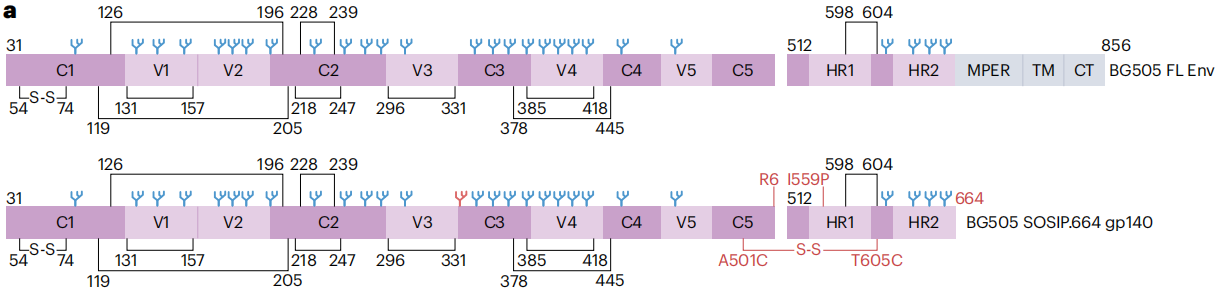
The viral envelope glycoprotein (Env) consists of heterodimers and trimers that encapsulate the surface of the viral particle. Each heterodimer contains a surface gp120 that binds to cellular receptors and a transmembrane gp41 that anchors the trimer to the viral phospholipid envelope. The quaternary structure of Env consists of three protomers, each a heterodimer containing gp120 and gp41 subunits. Variable regions V1 and V2 form a apex and cover three V3 regions on the trimer. V4 and V5 protrude from the central region. gp41 forms most of the base, surrounding the N-terminus and C-terminus of gp120. Each gp41 unit extends toward the gp120 body, forming a long helix near the trimer's triple axis, leaving a small central opening extending toward the trimer's apex. Viewed from above, the trimer is roughly triangular, with V4 and V5 protruding toward the corners.
The unbound trimer of gp120 consists of a conserved inner domain, a more variable outer domain, and a small subdomain oriented toward the apex containing three short β-chains (β3, β20, and β21). Unlike gp120, gp41 is primarily composed of α-helices: it contains two long heptameric repeating regions with a helical tendency and a single β - chain β27. Due to its fusion function, the N-terminal fragment is referred to as the fusion peptide.
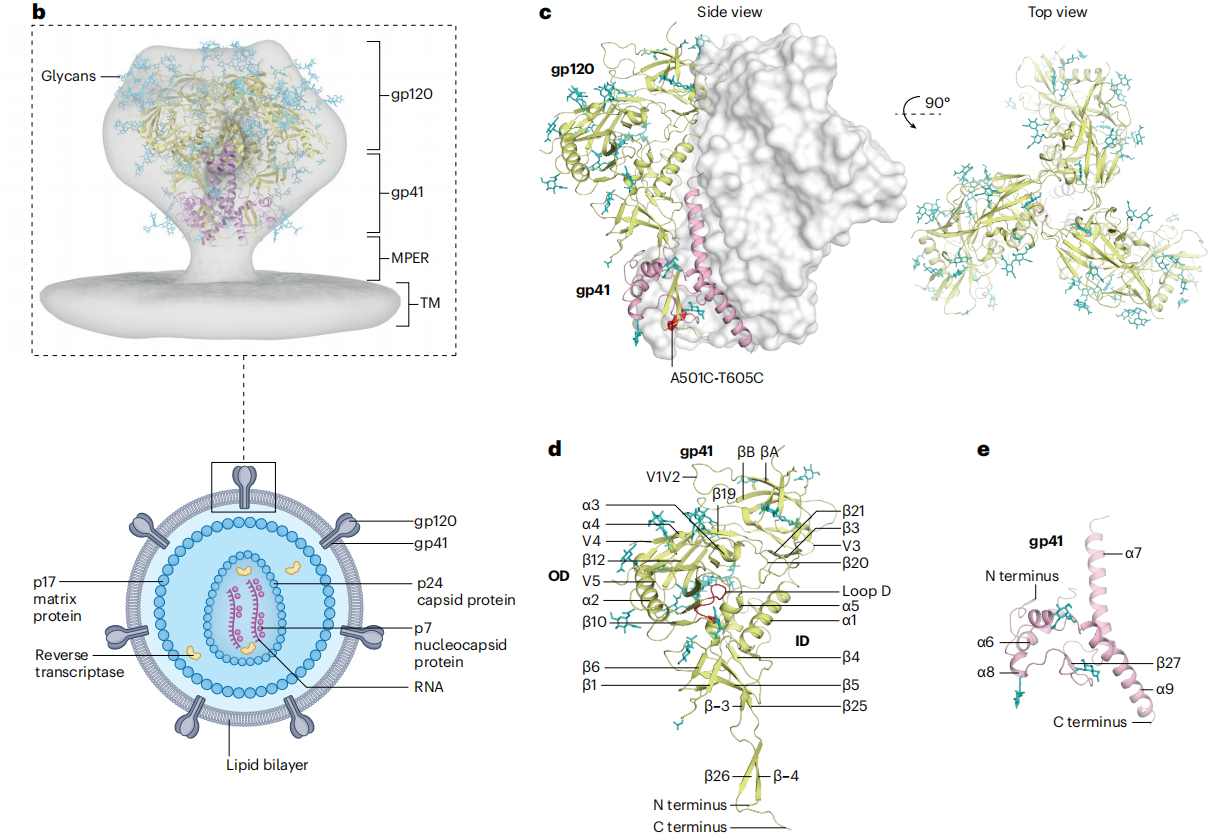
(Data source: Klasse PJ, et al. Nat Rev Microbiol. 2025)
The life cycle of HIV-1 virus
After entering an individual's body, the virus invades body cells via the CCR5 or CXCR4 receptors displayed on the top of macrophages, which are known as T lymphocytes, dendritic cells, and monocytes. Once inside the host cell, the virus binds to chemokine receptors and interacts with cell membrane proteins. The virus then releases and uses its reverse transcriptase (RT) enzyme to synthesize viral DNA from its viral genome (i.e., HIV RNA). This conversion allows the virus to enter the host cell nucleus, where integrase is released and performs the integration of its viral DNA into the host cell's DNA. The newly formed HIV proteins and viral RNA move to the cell membrane and recombine with immature HIV. The new immature (non-infectious) virus then buds from the host cell, which in turn causes the virus to release enzymes, leading to the breakdown of the immature viral long peptide chains. The newly formed protein particles allow new mature viruses to enter new host cells to spread infection.
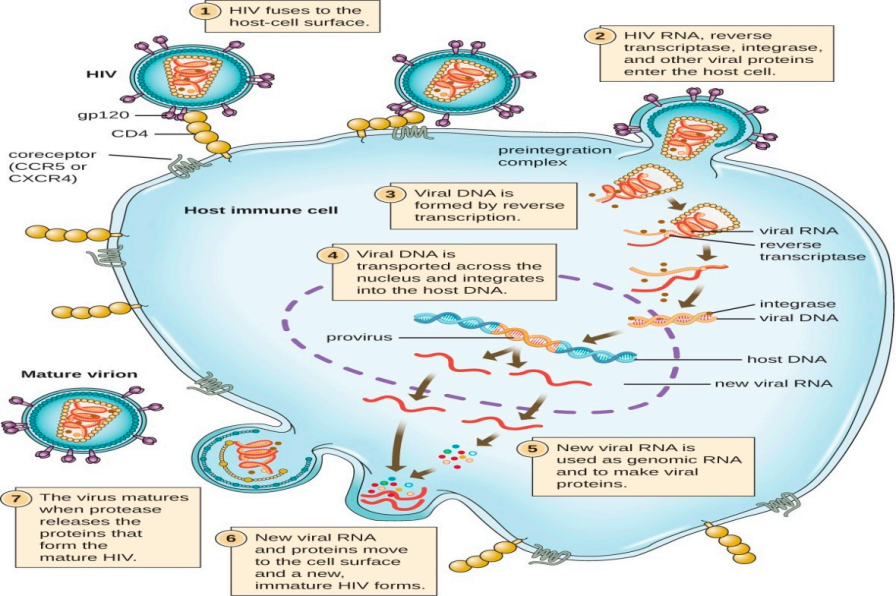
(Data source: Kaur R, et al. Molecules. 2020)
The role of HIV-1 envelope glycoprotein (Env) in HIV-1 entry
The viral replication cycle begins with the binding of viral particles to susceptible cells. This binding is achieved through the interaction of the viral particle with a viral receptor molecule on the cell membrane. In the case of HIV-1, this binding is not solely mediated by the Env protein. In addition to the virus-encoded Env, the envelope of the HIV-1 viral particle contains a variety of host proteins that regulate viral binding to the cell surface. The T helper cell marker CD4 serves as both the primary binding receptor for Env and triggers subsequent events during viral entry into the cell. Upon binding to gp120, CD4 induces a conformational change in the Env trimer, enabling it to interact with chemokine receptors (usually CCR5, or CXCR4 in rare affinity strains), thereby initiating the refolding of the semi-stable Env. Subsequently, FP inserts into the host cell membrane, while gp41 fuses the viral membrane with the host membrane, ultimately forming a stable fused six-helix bundle structure.

(Data source: Klasse PJ, et al. Nat Rev Microbiol. 2025)
HIV-1 targeted therapy
Current treatment strategies for HIV-1 have been categorized into RNA therapy, antibody therapy, cell therapy, genome editing strategies, and methods for eliminating latent reservoirs.
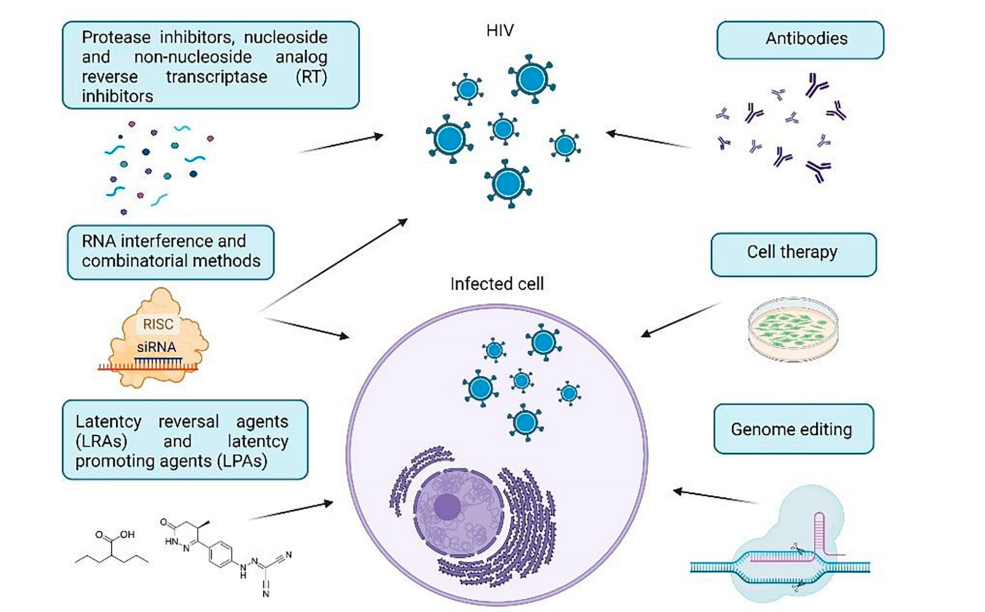
Broad-spectrum neutralizing antibodies primarily target five regions of the HIV trimer Env: the CD4 binding site (CD4bs), the V1/V2 binding site, the V3 glycosyl group, the glycoprotein (gp)41/gp120 interface, and the near-outer membrane region (MPER).
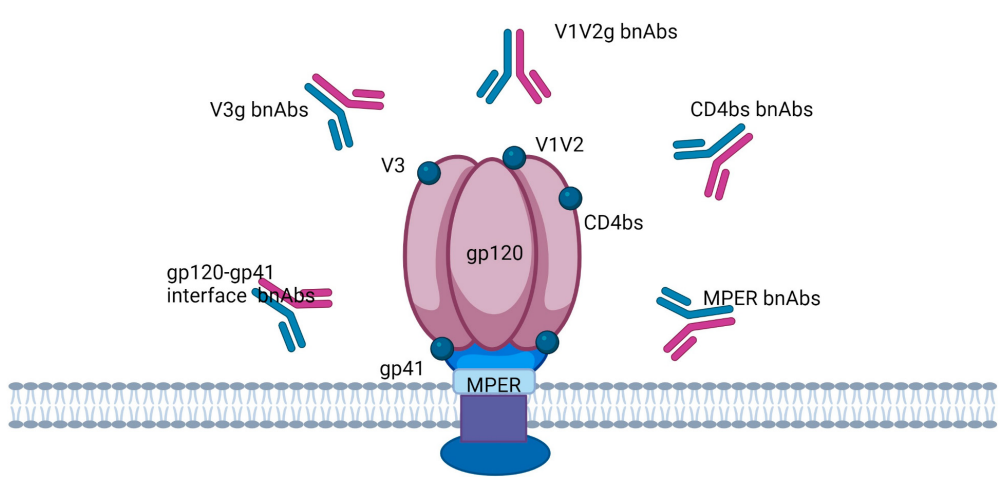
(Data source: Sorokina A, et al. Front Med (Lausanne). 2023)
Lenacapavir (LEN) is a monoclonal antibody targeting the HIV-1 capsid protein (CA), developed by Gilead and approved for marketing. LEN is a first-in-class antiretroviral drug that interferes with HIV replication at multiple stages. LEN targets the CA protein, both in the late stages when CA is an immature domain in Gag and in the early stages when CA is processed and assembled into a mature capsid core. The Phase II/III CAPELLA trial (NCT04150068) reported that adding LEN to the participants' prescribed ART regimen suppressed the replication of drug-resistant virus in 21 of 24 participants. The Phase II CALIBRATE trial (NCT04143594) reported that LEN treatment effectively suppressed the virus in the treatment of newly diagnosed PLWH. LEN is administered subcutaneously every 6 months (927 mg) after an optional oral pretreatment period (300-600 mg). This is currently the longest-acting injectable formulation of any HIV pre-exposure prophylaxis (PrEP) drug.
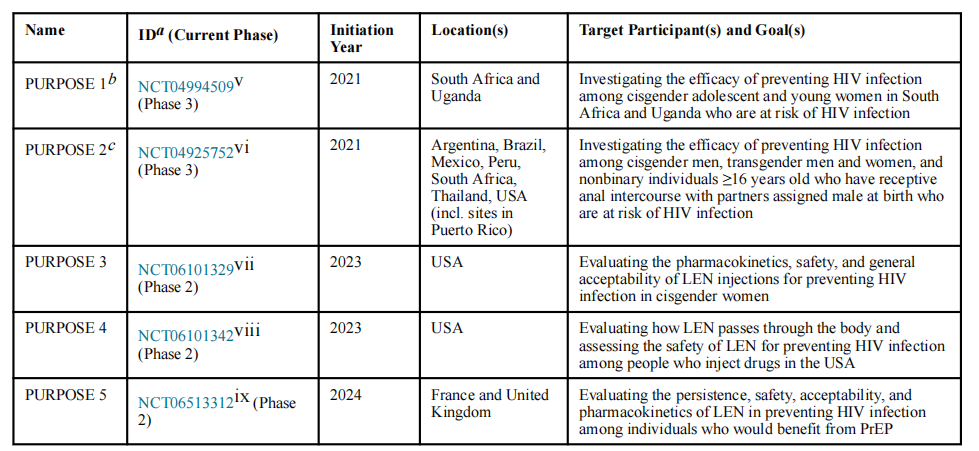
(Data source: McFadden WM, et al. Trends Mol Med. 2025)
Teropavimab (GS-5423) targets the CD4 binding site of gp120, and zinlirvimab (GS-2872) targets the gp120 V3 loop. Both are developed by Gilead and are currently in phase 3 clinical trials. Teropavimab and zinlirvimab, along with their shorter half-lived precursors 3BNC117 and 10-1074, have been evaluated as dual therapy for virologically suppressed HIV-1 patients, including in HIV-1 remission and cure studies. Although virological suppression rates remain lower than standard ART, the duration of suppression with teropavimab and zinlirvimab is significantly prolonged compared to placebo.
LEN, teropavimab, and zinlirvimab have similar half-lives. Dr. Joe Eron and his team conducted a phase II clinical trial, combining the three drugs lenacapavir, teropavimab, and zinlirvimab into an injectable formulation. Teropavimab and zinlirvimab are two particularly potent broad-spectrum neutralizing antibodies (bNAbs). They can recognize and inhibit many different types of HIV viruses. A single dose of lenacapavir, teropavimab, and zinlirvimab showed similar efficacy to daily oral ART therapy before week 26. The regimen was well-tolerated with no serious adverse events. This long-acting treatment regimen offers a potential option for HIV-1 patients who are sensitive to teropavimab and zinlirvimab monoclonal antibodies, prefer a lower dosing frequency, or may face challenges in adhering to daily oral standard therapy.
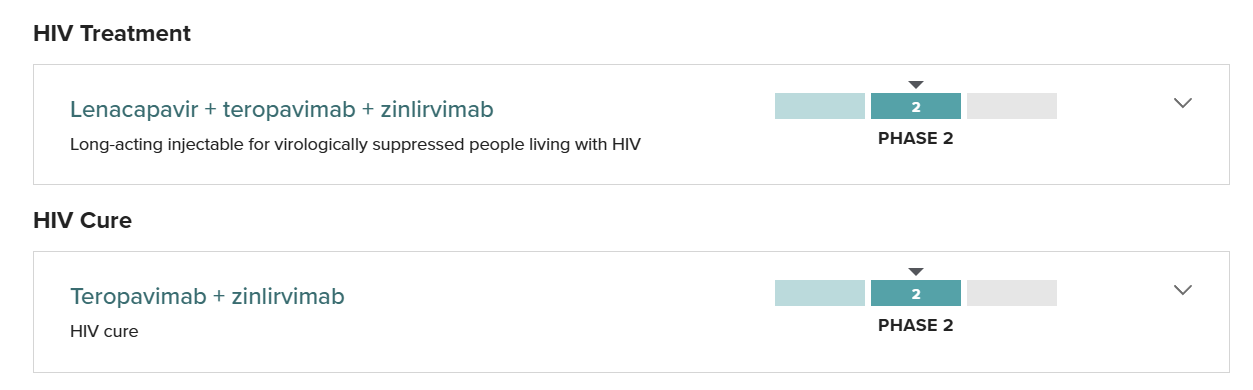
(Data source: Gilead official website)
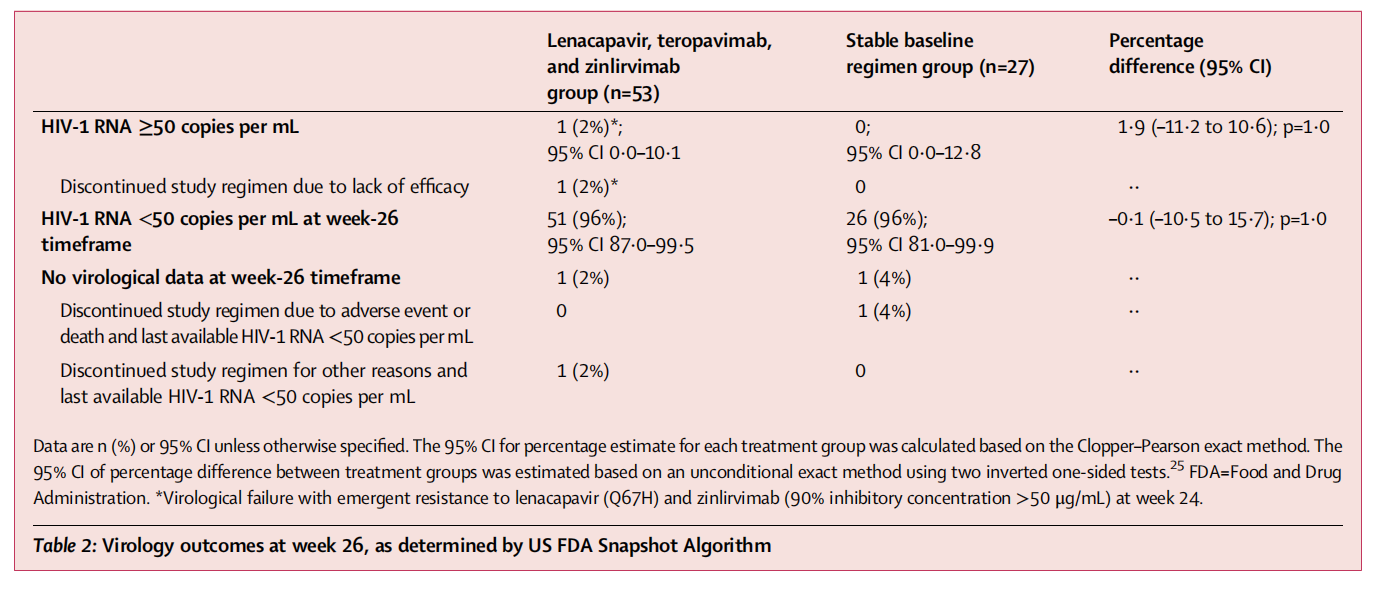
(Data source: Ogbuagu O, et al. Lancet Microbe. 2026)
