KIR2D is a member of the killer cell immunoglobulin-like receptor (KIR) family, possessing two extracellular immunoglobulin-like domains (D1 and D2), and is primarily expressed on the surface of natural killer (NK) cells and some T cell subsets. The KIR2D family includes repressive subtypes (such as KIR2DL1, KIR2DL2, KIR2DL3, KIR2DL4, and KIR2DL5) and activating subtypes (such as KIR2DS1, KIR2DS2, and KIR2DS4). By recognizing HLA-I molecules (especially HLA-C) on the surface of target cells, they play a central role in NK cell self-recognition and immune homeostasis regulation.
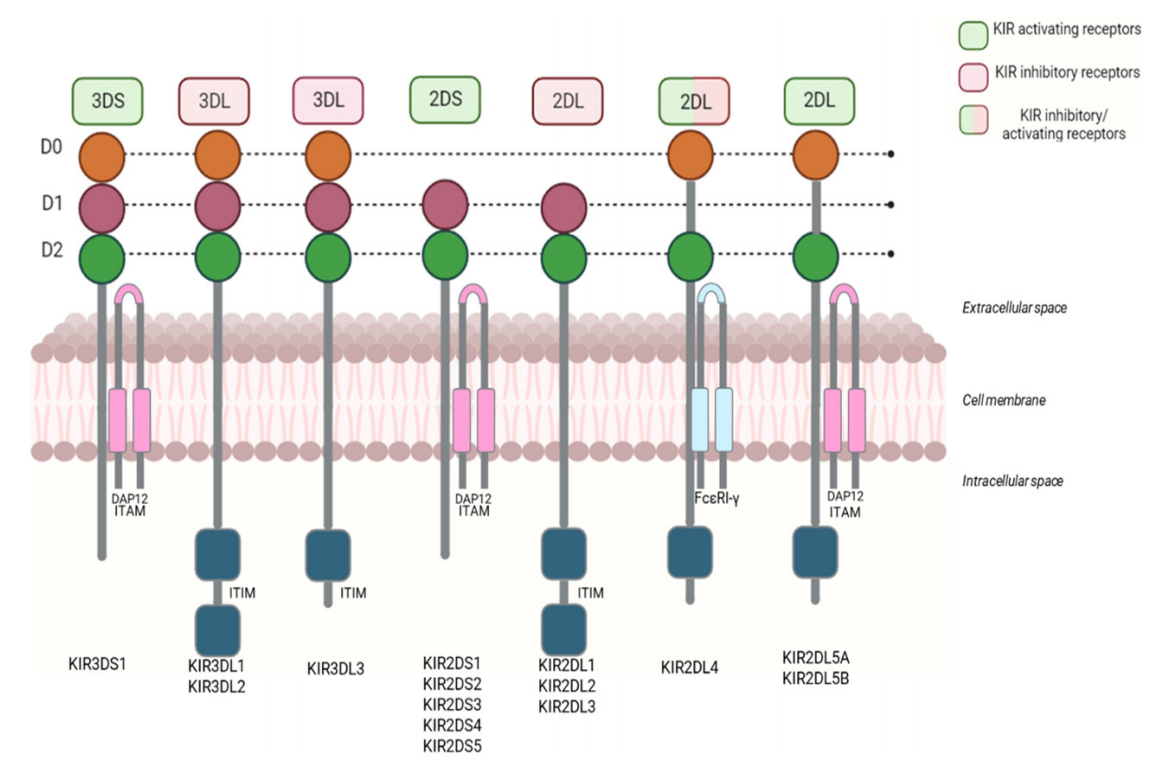
(Data source: Agnello L, et al. Int J Mol Sci. 2025)
Structure of KIR2D and its receptor
KIR2D molecules belong to type I transmembrane glycoproteins and are mainly composed of extracellular, transmembrane, and intracellular regions.
Extracellular region: Composed of two immunoglobulin-like domains (D1 and D2), where the D1 domain primarily recognizes the α1 helix of the HLA molecule, and the D2 domain recognizes the α2 helix. D1 and D2 are connected by a hinge region, forming an approximately right-angle conformation, which allows them to bind to the HLA-C molecule in a manner similar to the T-cell receptor (TCR).
Transmembrane region: Contains a hydrophobic transmembrane helix that connects the extracellular and intracellular regions. The transmembrane region of activating KIR2D contains charged residues (such as lysine) for binding to the adaptor protein DAP12/KARAP.
Intracellular region: Based on the length of the intracellular segment, it is divided into long intracellular segments and short intracellular segments. Long intracellular segments (L-type) , such as KIR2DL1/2/3, contain 1-2 immunoreceptor tyrosine inhibitory motifs (ITIMs) and are responsible for transmitting inhibitory signals. Short intracellular segments (S-type), such as KIR2DS1/2/4, lack ITIM motifs; their transmembrane region carries positively charged residues that bind to the ITIM-containing adaptor protein DAP12, transmitting activation signals.
The special subtype KIR2DL4 has a unique D0-D2 structural arrangement (lacking the D1 structural domain) and possesses both inhibitory and activating signal transduction capabilities. KIR2DL5 contains a typical ITIM sequence and an atypical ITIM sequence, belonging to the more structurally unique type II KIR2D member.
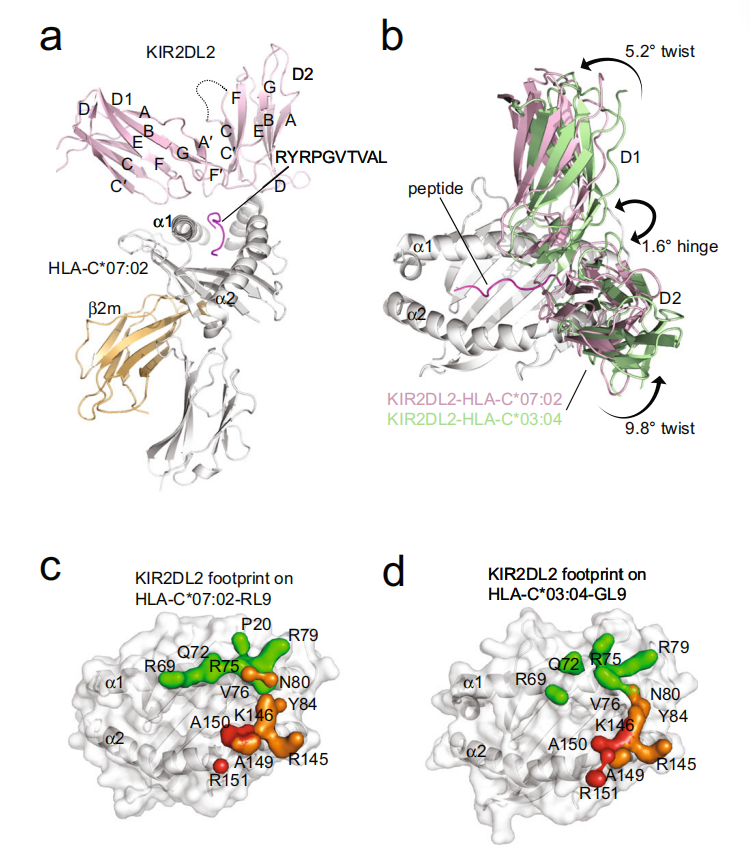
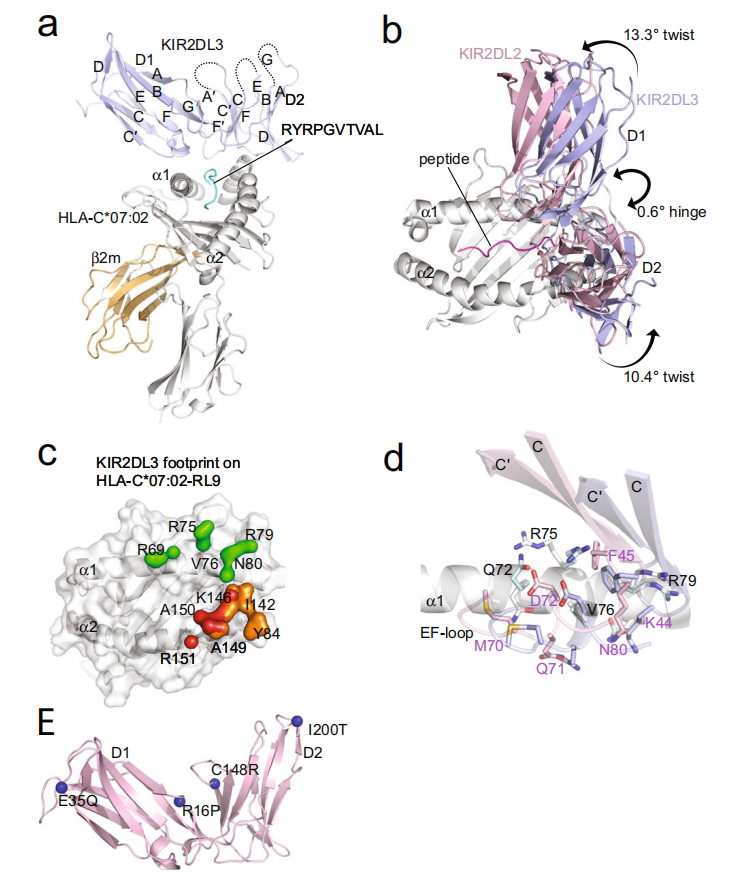
(Data source: Moradi S, et al. Nat Commun. 2021)
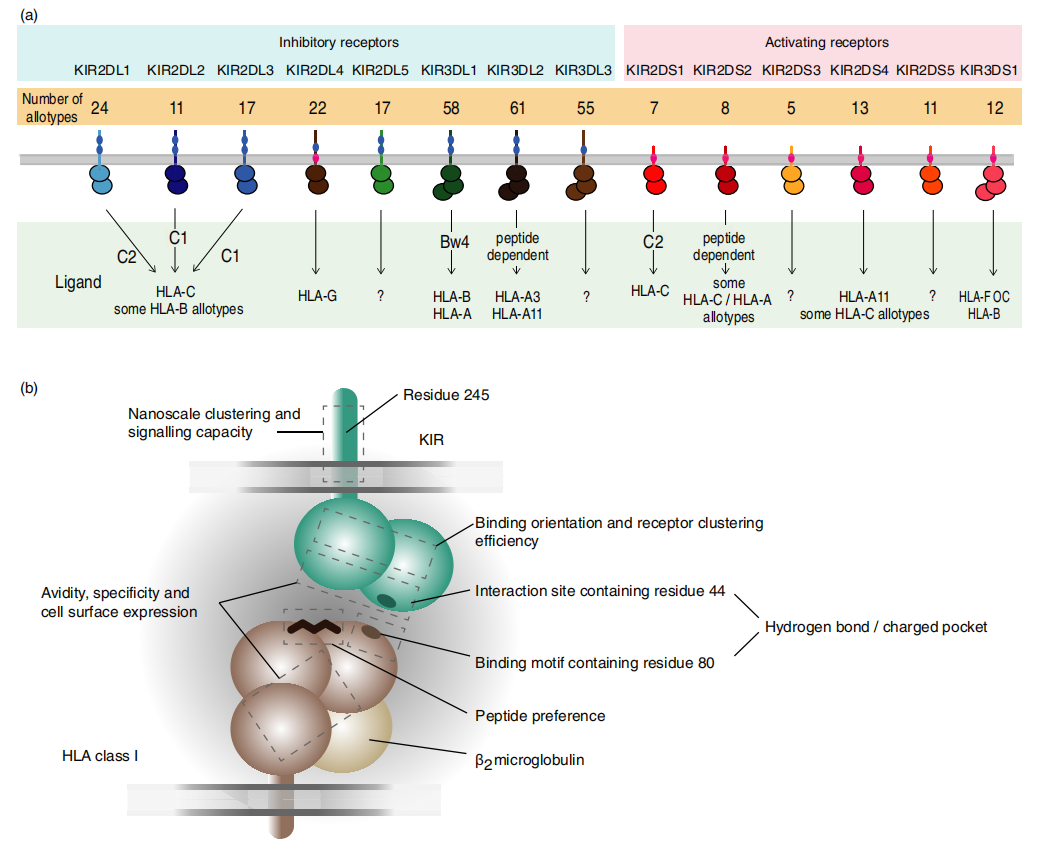
(Data source: Béziat V, et al. Immunology. 2017)
KIR2D signaling pathway and modulation
Based on the differences in their intracellular segment structures, KIR2Ds are divided into two main categories: inhibitory (KIR2DL) and activating (KIR2DS), which have different mechanisms.
When the inhibitory KIR2D binds to HLA-C molecules on the surface of target cells, tyrosine residues in its intracellular ITIM motif are phosphorylated by Src family kinases. Phosphorylated ITIM recruits protein tyrosine phosphatases containing the SH2 domain, SHP-1 and/or SHP-2. SHP-1/2 inhibit key molecules in the NK cell activation signaling pathway (such as ERK, AKT, and Vav1) through dephosphorylation, blocking downstream signal transduction and thus inhibiting NK cell cytotoxicity, cytokine release, and proliferation.
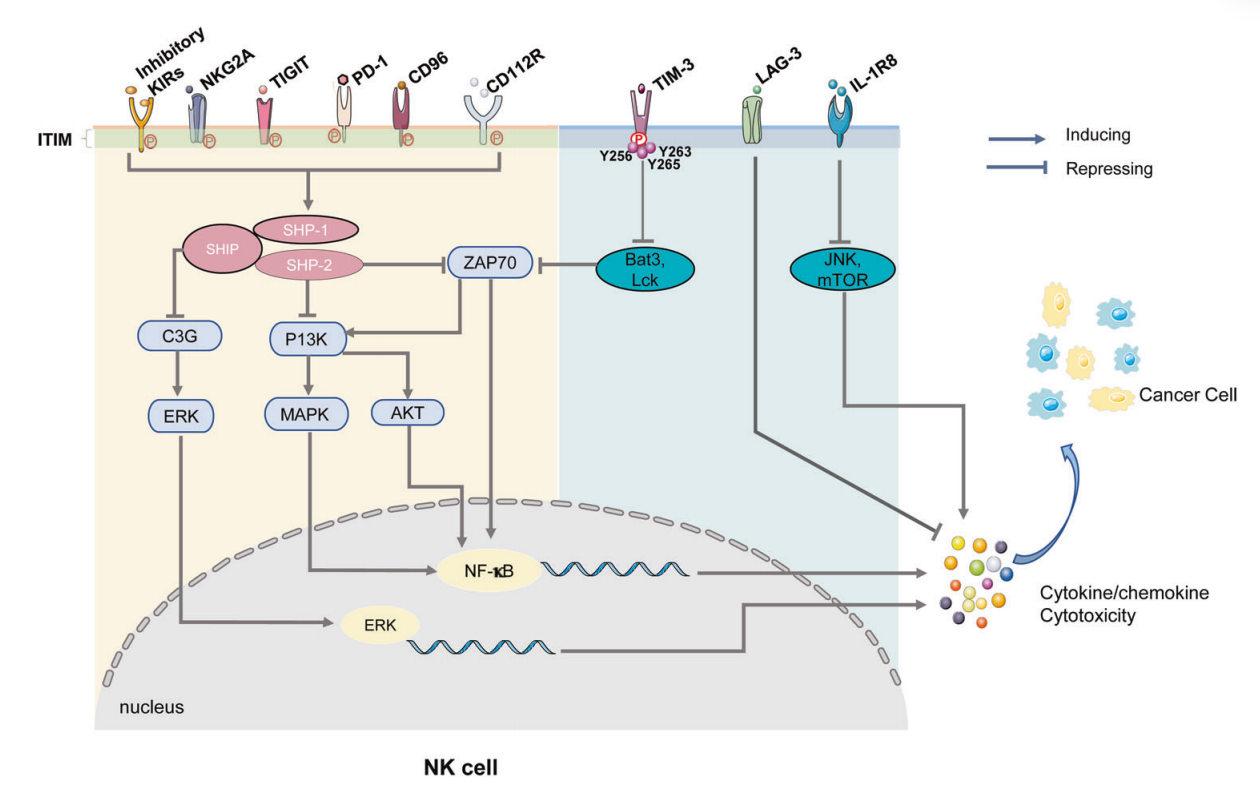
(Data source: Cao Y, et al. Signal Transduct Target Ther. 2020 )
Activated KIR2D lacks the ITIM motif; its charged residues in the transmembrane region bind to the adaptor protein DAP12 (KARAP). Upon binding to its ligand, the intracellular immune receptor tyrosine activation motif (ITAM) of DAP12 is phosphorylated, thereby recruiting Syk/ZAP-70 family kinases, activating downstream JNK and ERK signaling pathways, and promoting NK cell cytotoxicity, IFN-γ production, and proliferation. KIR2DS2 can also transmit co-stimulatory signals through the DAP12-independent JNK pathway in certain T cell subsets.
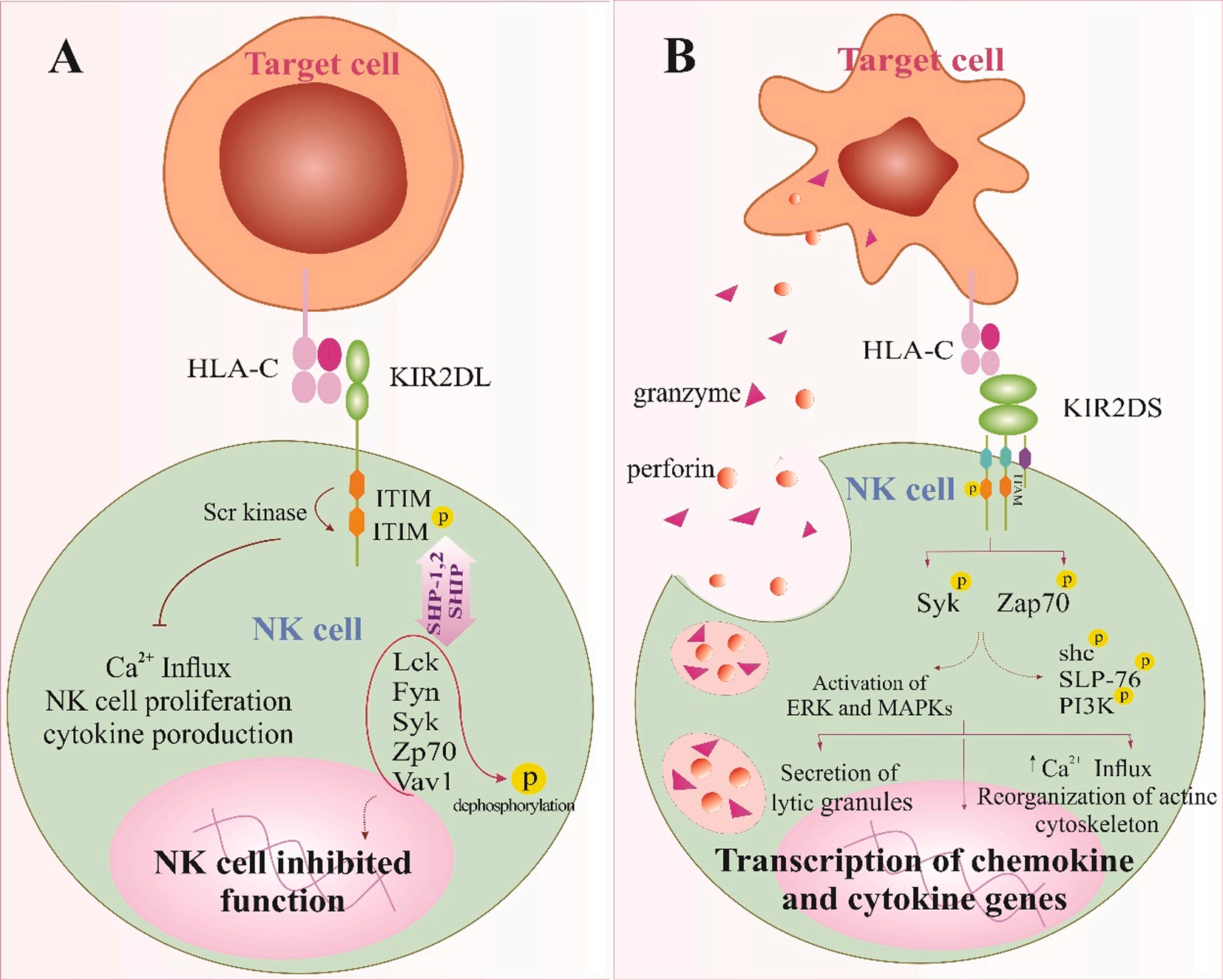
(Data source: Dizaji Asl K, et al. Int Immunopharmacol. 2021)
KIR2D targeted therapy
Lirilumab (IPH2102) is an IgG4 antibody targeting two major inhibitory KIR receptors (KIR2DL1 and KIR2DL2/3). It blocks KIR2DL1/2DL2/2DL3 and enhances the antitumor activity of NK cells. It prevents the binding of inhibitory KIRs to HLA-C ligands, thereby keeping NK cells in an activated state. Crystal structure analysis shows that the Fab fragment of lirilumab binds to the D1 domain of KIR2DL3, and its epitope overlaps with the HLA-C binding site by approximately 134 Ų, blocking KIR-HLA interaction through spatial competition. This antibody has been clinically investigated in multiple myeloma, acute myeloid leukemia, and solid tumors. Phase I clinical trials demonstrated the preliminary safety of lirilumab, prompting several Phase II clinical trials using lirilumab alone and in combination with other chemotherapy drugs. While the poor efficacy of lirilumab in these trials may have prevented it from entering Phase III clinical trials, the lack of understanding of lirilumab's epitopes and its specificity for different KIR variants and different patients may hinder additional Phase II clinical trials in more stratified patient populations.
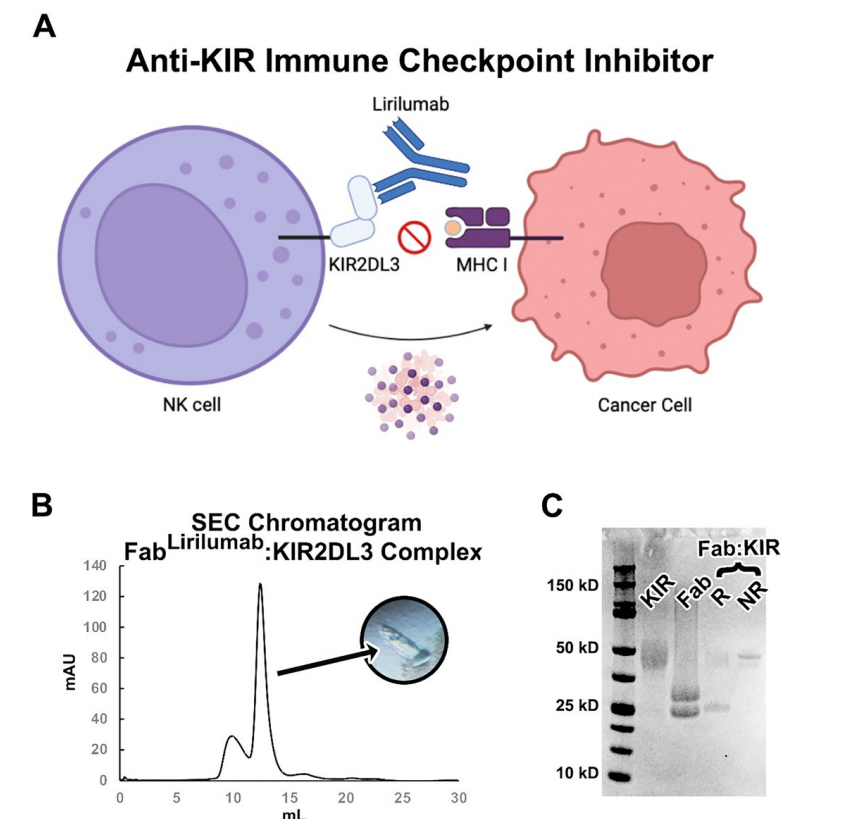
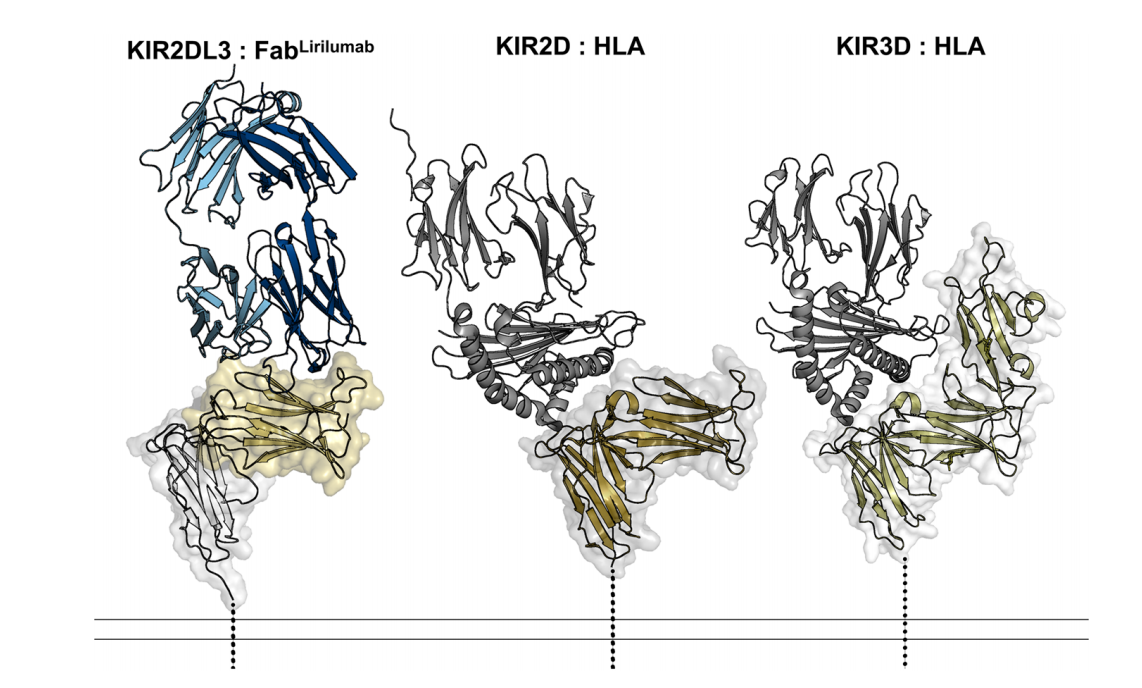
(Data source: Agnello L, et al. Int J Mol Sci. 2025)
KIR2DL5, a member of the human killer cell immunoglobulin-like receptor (KIR) family, has recently been discovered to be another binding partner for PVR. The biological and therapeutic potential of the KIR2DL5/PVR pathway remains largely unknown. KIR2DL5 is primarily expressed on mature human NK cells with cytolytic function and binds to PVR without competing with the other three known PVR receptors. The interaction between KIR2DL5 on NK cells and PVR on target cells induces inhibitory synapse formation, and monoclonal antibodies blocking the KIR2DL5-PVR interaction enhance the killing effect of NK cells on PVR+ tumors. KIR2DL5-positive immune cells infiltrate various PVR-positive tumors. In several NK cell-based humanized tumor models, KIR2DL5 blockade reduced tumor growth and improved overall survival. These results reveal the functional mechanism of KIR2DL5-mediated NK cell immune escape, demonstrate the KIR2DL5/PVR axis as a potential approach to treating human tumors, and provide a potential mechanism for clinical failure of anti-TIGIT therapy.
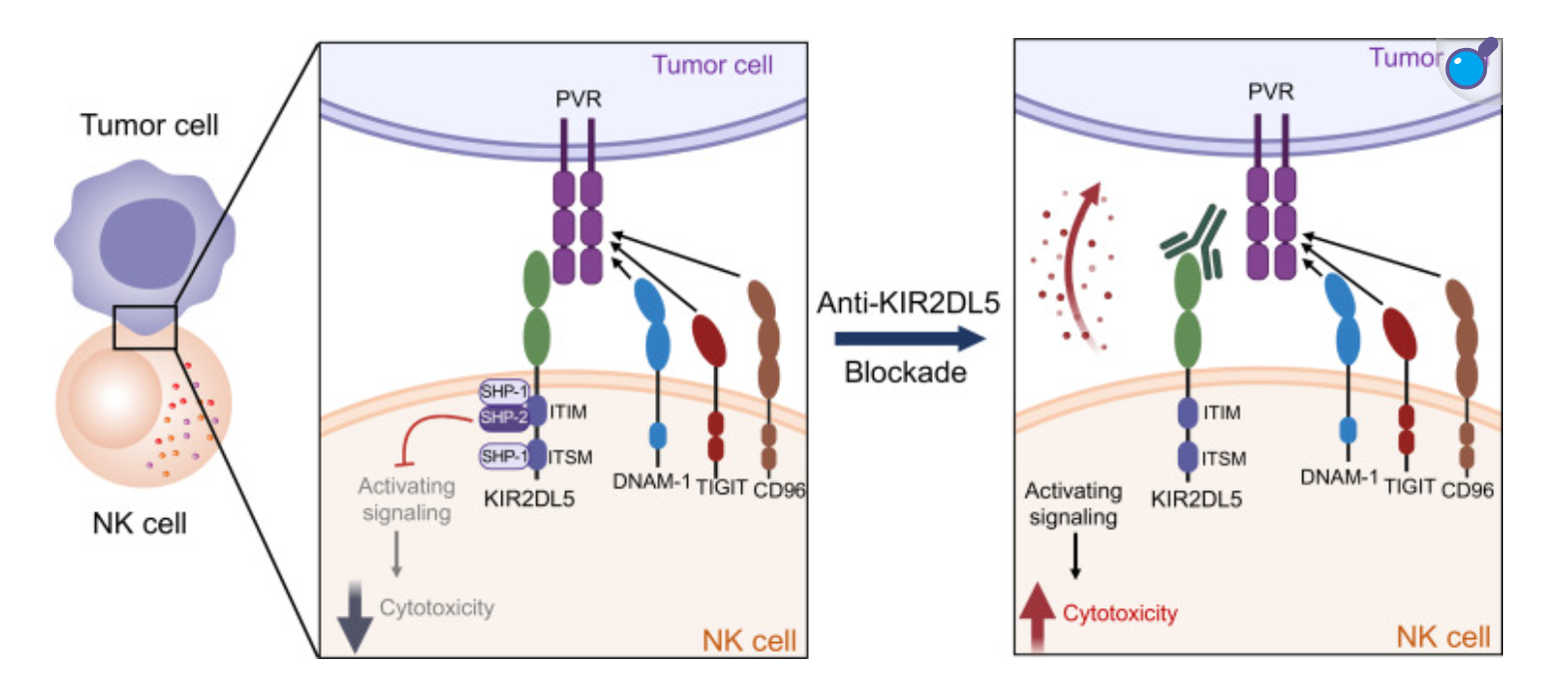
(Data source: Ren X, et al. J Clin Invest. 2022)
