Differentiation cluster 24 (CD24) is a mucin -like, highly glycosylated molecule that has been extensively studied as a cancer stem cell marker in various solid tumors. CD24, by binding to Siglec-10 (Siglec-G in mice), triggers ITIM-dependent recruitment of the inhibitory phosphatases SHP-1 and SHP-2, and initiates downstream inhibitory signaling pathways to suppress macrophage-mediated phagocytosis. This CD24-Siglec axis is functionally similar to the classic myeloid checkpoint CD47-SIRPα, which also promotes immune escape from macrophage-rich solid tumors by transmitting a "don't eat me" signal through a shared anti-phagocytic signaling pathway. CD24 plays a crucial role in bridging tumor-inherent plasticity and myeloid-driven immunosuppression within the tumor microenvironment (TME).
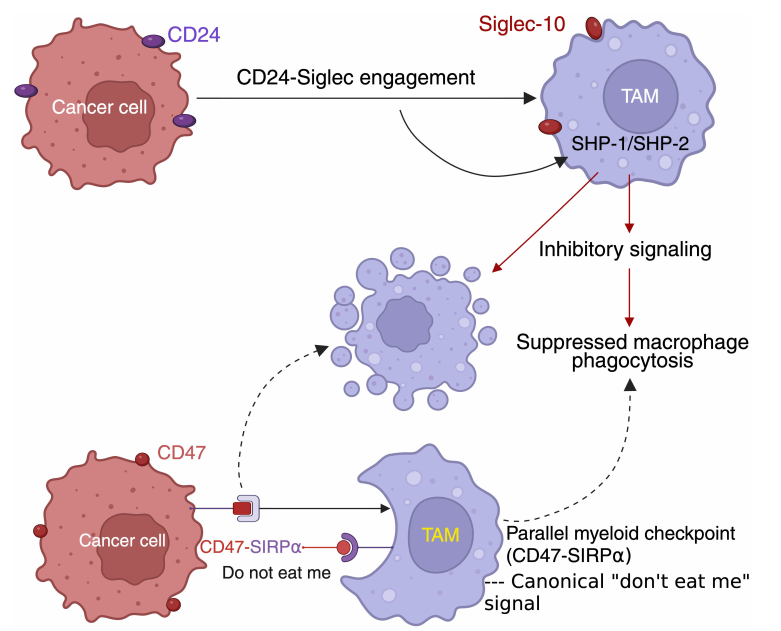
(Data source: Zhou W, et al. Front Immunol. 2026)
CD24 expression distribution and structure
CD24 is expressed on the surface of a variety of cells, including hematopoietic cells (such as T cells, B cells, myeloid cells, dendritic cells, and macrophages) and non-hematopoietic cells (such as keratinocytes, myofibrils, neurons, and renal tubular epithelial cells). In solid tumors, CD24 is frequently upregulated and exhibits significant heterogeneity across different cancer types and within individual tumors.
CD24 is a human protein that is initially produced as a precursor protein containing 80 residues. After the C-terminal glycosylphosphatidylinositol (GPI) anchor sequence and the N-terminal signal sequence are cleaved, a mature peptide containing 32 residues is produced.
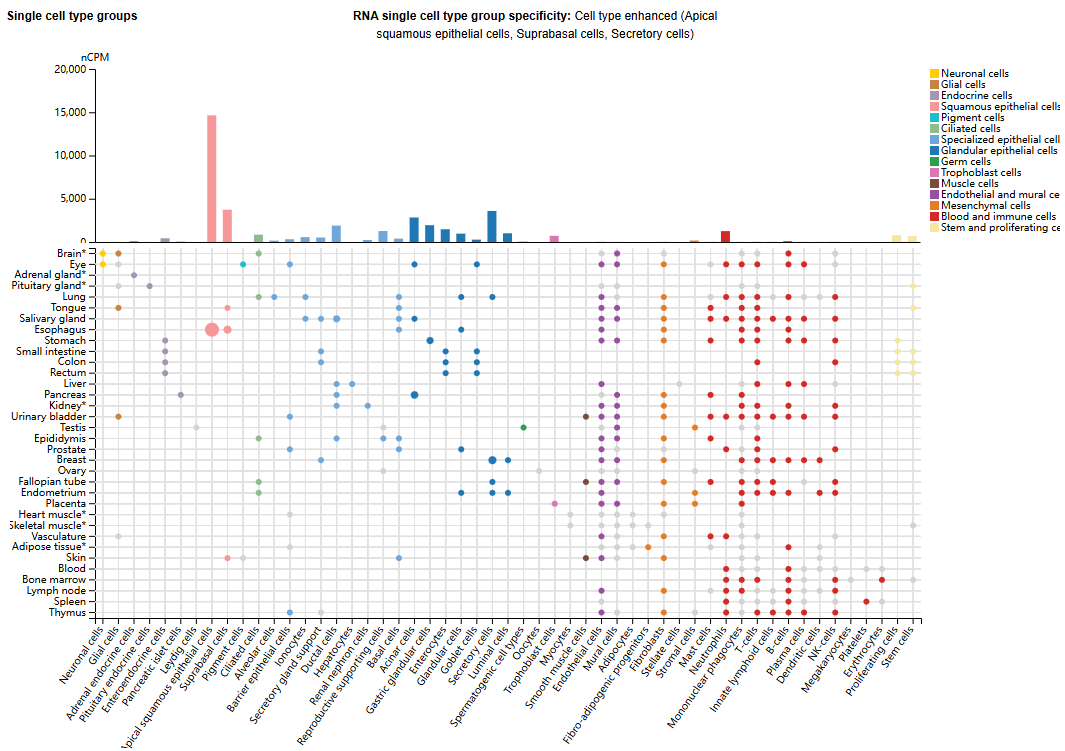
(Data source: uniprot)
Signaling Pathways and Regulation of CD24 in Cancer
Multiple cancer-related signaling pathways are activated when CD24 expression changes. The main CD24-mediated signaling pathways include Wnt/β-catenin, mitogen-activated protein kinase (MAPK), Src or PI3K/Akt kinase, and the Notch and Hedgehog pathways.
The Wnt/β-catenin signaling pathway: CD24 may activate the interaction between β-catenin and the Wnt pathway and induce β-catenin translocation to the nucleus. In breast cancer, β-catenin has been shown to inhibit tumor immune escape by downregulating CD24 expression. Furthermore, in the untransformed human breast epithelial cell line MCF-10A, CD24 has been identified as a transcriptional target of the Wnt signaling pathway. The Notch and Wnt/β-catenin signaling pathways play important roles in activating CD24-expressing hepatocellular carcinoma stem cells.
Mitogen-activated protein kinase (MAPK) signaling pathway: CD24 has been shown to affect the phosphorylation and activity of key components in B cells and cancer cells. Agrawal et al. demonstrated that CD24 expression is negatively correlated with phosphorylated MAPK in cholangiocarcinoma, the ERK1/2 pathway is activated in colorectal cancer (CRC), and MEK1/2 inhibitors can block CD24-induced proliferation. Cell proliferation is accompanied by increased activity of Raf-1 (an upstream activator of ERK1/2), ERK1/2, and p38 MAPK. In CSC, activation of the MAPK pathway leads to the promotion of cancer stem cell-like phenotypes and the maintenance of tumor potential. Therefore, CD24 indirectly mediates the maintenance of these cells by activating the MAPK pathway, suggesting that the association between CD24 and this pathway may reveal a novel mechanism regulating CRC proliferation.
PI3K/Akt mTOR signaling pathway: CD24 affects the epithelial-mesenchymal transition (EMT) signaling cascade via the PI3K/Akt mTOR signaling pathway. CD24-induced proliferation and invasiveness in ovarian cancer depend on the activation of PI3K/Akt, NF-κB, and ERK. CD24 affects STAT3 phosphorylation and alters the expression of STAT3-dependent genes by activating Src. Furthermore, inhibition of CD24 suppresses tumor growth, consistent with therapeutic effects targeting the mTOR, PI3K/Akt, and STAT3 pathways.
Notch signaling pathway: Activation of the Notch signaling pathway is essential for maintaining CD44+/CD24−/low tumor initiation cells in breast cancer. Furthermore, CD24 knockdown leads to decreased Notch1 expression, thereby reducing cancer stem cell characteristics and epithelial-mesenchymal transition. Notch1 expression in hepatocellular carcinoma (HCC) cells and adjacent samples is positively correlated with CD24 expression, and the interaction between CD24 and Notch1-related signaling pathways may constitute a potential regulatory mechanism involved in the pathogenesis of HCC.
Hedgehog (Hh) signaling pathway: Activation of the Hedgehog (Hh) signaling pathway leads to the generation of cancer cells in vitro or in transgenic models. Blocking the Hh signaling pathway is associated with a significant downregulation of CD24 expression in vitro. Furthermore, CD24 can also affect the Hedgehog signaling pathway by inhibiting STAT1, thereby leading to downregulation of SHH (Sonic Hedgehog) transcription in breast cancer cells.
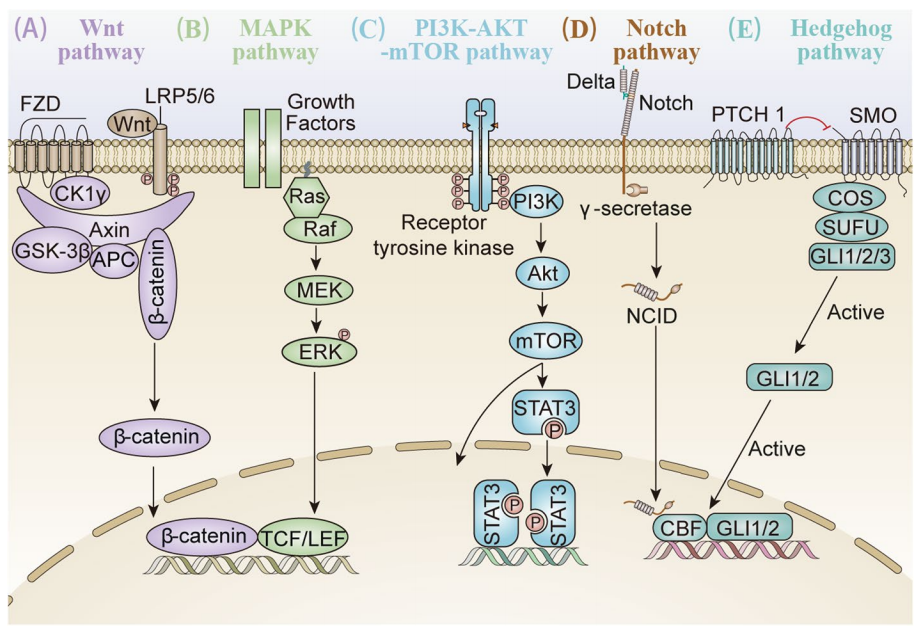
(Data source: Yang Y, et al. Cell Commun Signal. 2023)
The role of CD24 in tumor immune escape
In addition to its direct role in promoting tumor progression, CD24 also acts as a key regulator of anti-tumor immunity through its interaction with Siglec-10 on macrophages. This interaction establishes a "don't eat me" signal that inhibits phagocytosis, allowing tumor cells to evade innate immune surveillance.
As an innate immune checkpoint: CD24 acts as an inhibitory ligand; it transmits Siglec-10-dependent inhibitory signals in many human tumors. Blocking it enhances phagocytosis and inhibits tumor growth.
As a target for opsonization: CD24 antibodies promote phagocytosis through Fc- mediated opsonization, such as bispecific antibodies (e.g., antibodies targeting CD24 and CD47). However, in some cases, monospecific antibodies do not induce therapeutic efficacy, suggesting that the mechanism varies depending on the tumor microenvironment. In addition to macrophages, CD24 also recruits tumor neutrophils, is associated with dendritic cell infiltration, and promotes M2 polarization. Therefore, CD24 is an environment-dependent innate immunomodulator that functions through checkpoint and opsonization mechanisms.
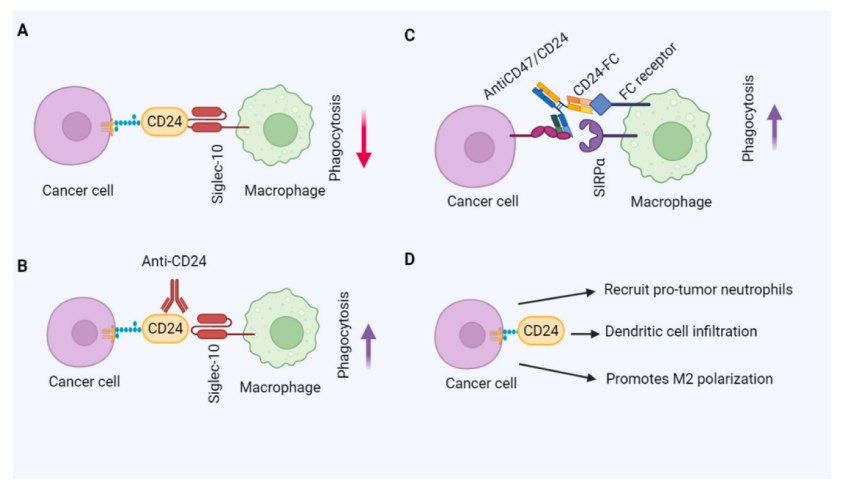
(Data source: Yu H, et al. Mol Immunol. 2026)
CD24 -targeted therapy
CD24 has become a compelling therapeutic target due to its dual function: serving as both an innate immune checkpoint (via the CD24-Siglec-10 axis) and an intracellular driver of oncogenic signaling. Currently, various therapeutic strategies targeting CD24 are under investigation, spanning multiple stages of clinical development.
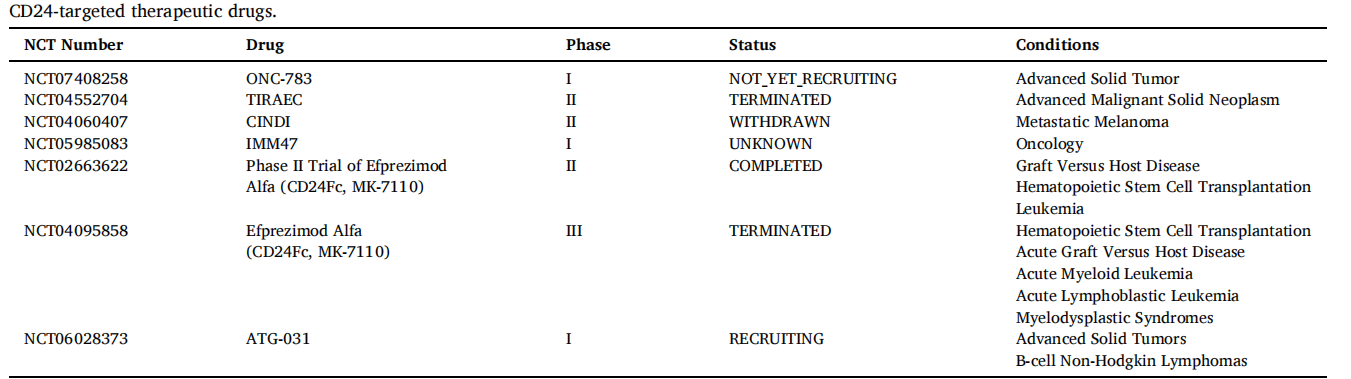
(Data source: Yu H, et al. Mol Immunol. 2026)
PHST-001 is a CD24-targeting macrophage immune checkpoint inhibitor designed to overcome immunosuppression in the tumor microenvironment and restore immune recognition to attack cancer. By potently blocking the CD24-Siglec10 interaction, PHST-001 enables macrophages to engulf cancer cells, thereby triggering a strong immune response. PHST-001 has demonstrated potent monotherapy efficacy in solid tumor models, superior to other macrophage immune checkpoint inhibitors. Pheast is conducting a Phase I clinical trial (NCT06840886) of PHST-001 in patients with advanced solid tumors. This study aims to evaluate safety, pharmacokinetics, and early indications of antitumor activity, with the goal of determining a recommended Phase II dose. PHST-001 is well tolerated, with most TRAEs being grade 1/2, except for neutropenia (which was not associated with clinical complications and was short-lived). There is one dose-limiting toxicity, namely febrile neutropenia (fever subsided on the same day, and neutropenia resolved within 48 hours). No treatment-related adverse events (TRAEs) leading to treatment cessation or death occurred. PHST001 treatment showed initial signs of clinical activity, with disease stabilization in 21 of 45 patients and tumor shrinkage in 6. The pharmacokinetic characteristics of PHST001 were favorable and linear, with dose-proportionate exposure; higher PHST001 doses were associated with higher CD24 occupancy and immune activation. Further evaluation of higher doses of PHST001 is expected to improve CD24 blockade in tumors, and the combination of PHST001 with chemotherapy may improve macrophage phagocytosis of chemotherapy-stressed tumor cells.
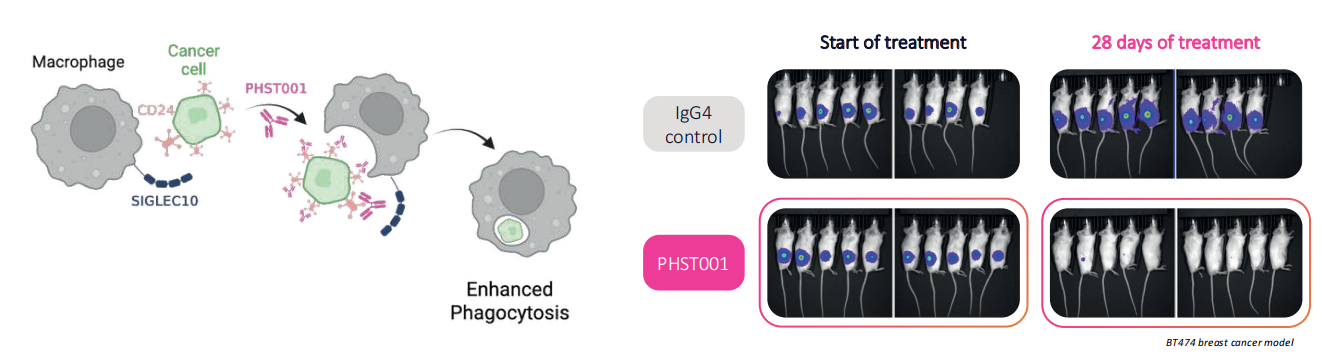
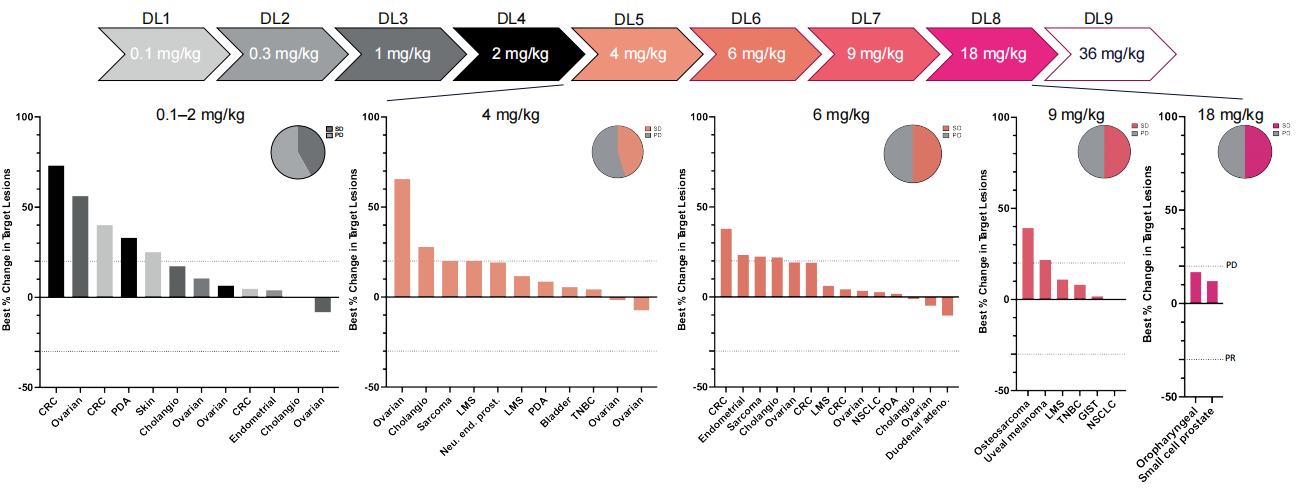
(Data source: Pheast official website)
ATG-031 is a monoclonal antibody targeting CD24 developed by Antengene. Blocking CD24 enhances macrophage-mediated phagocytosis of cancer cells and polarizes M2 macrophages towards the anti-tumor M1 subtype. A multicenter, open-label phase I study of ATG-031 in patients with advanced solid tumors or B-NHL was initiated. The study design includes dose-escalation and dose-expansion phases and will enroll patients with advanced solid tumors (i.e., the preferred tumor type) or relapsed/refractory (R/R) B-NHL. The primary objective of this study is to evaluate the safety and tolerability of ATG-031 and determine the recommended phase II dose (RP2D) of ATG-031.
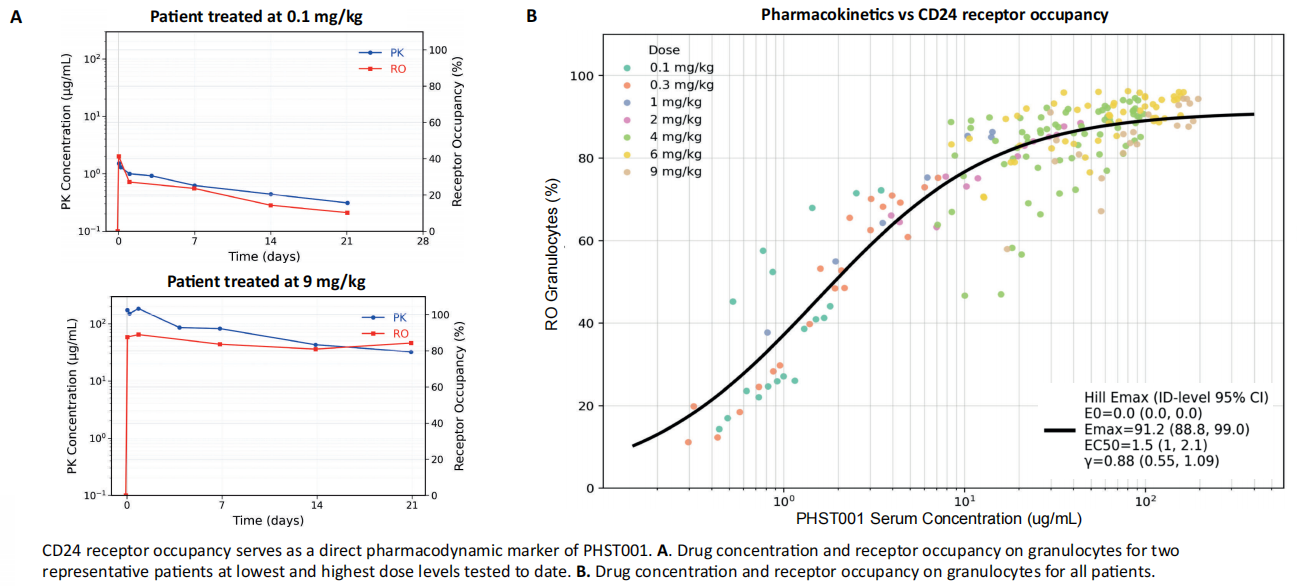
(Data source: Antengene Corporation official website)
