Epilepsy protein 6 homolog (SEZ6) is a type I transmembrane protein on the cell surface involved in neuronal development. Its expression in adult tissues is almost exclusively limited to the central nervous system. Abnormal expression of SEZ6 is associated with neurodevelopmental and psychiatric disorders such as epilepsy, schizophrenia, and Alzheimer's disease. It is currently being investigated as a novel target for neuroendocrine malignancies.
SEZ6 expression distribution
SEZ6 expression is primarily confined to the central nervous system and pituitary gland. Low levels of expression are detected in gastrointestinal tissues, including the colon, stomach, pancreas, and small intestine, and similarly low levels are observed in the testes. SEZ6 is mainly expressed by neurons, with particularly high levels in the forebrain during embryonic and neonatal development. Expression gradually decreases after birth. In the adult brain, SEZ6 is mainly located in layers V and VI of the cerebral cortex, the CA1 area of the hippocampus, the striatum, and the olfactory ducts, while expression is weak or absent in most other areas. In malignant tumors, SEZ6 appears to be selectively expressed by high-grade neuroendocrine cancer cells.
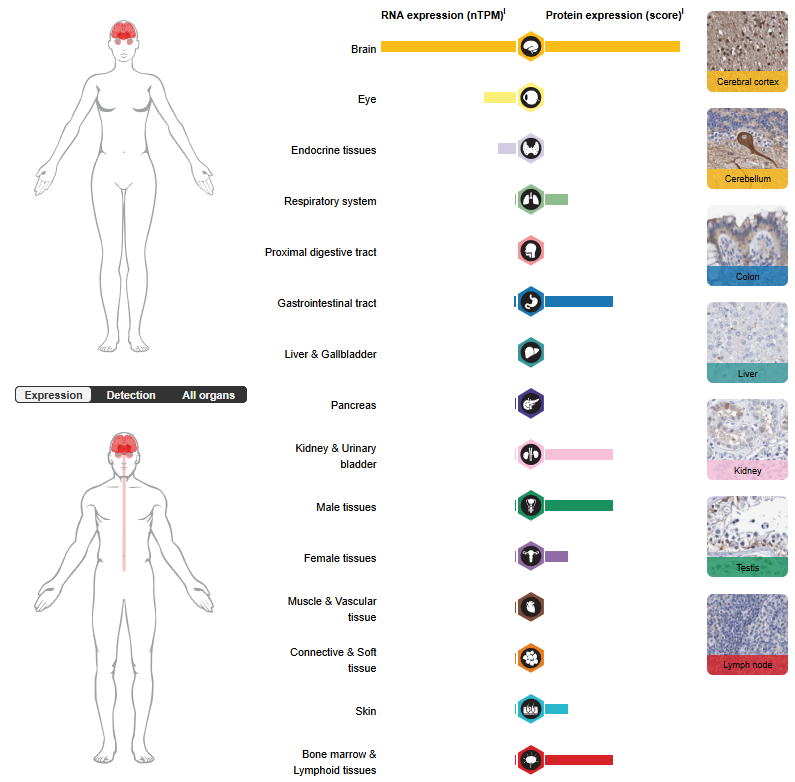
(Data source: uniprot)
SEZ6 structure
SEZ6 is an N-glycosylated type I transmembrane protein, consisting of 994 amino acids in its full length. It comprises five short consensus repeat (SCR) domains and three CUB domains (named after supplementary C1r/C1s, Uegf, and Bmp1), and also has a short cytoplasmic domain. SEZ6 is an important physiological substrate of the β-secretase BACE1. Its cleavage site is located adjacent to the transmembrane region, releasing the soluble extracellular domain sSEZ6. This cleavage process occurs with high specificity in neurons and is crucial for SEZ6 function. Unlike other BACE1 substrates such as APP, SEZ6 cannot be cleaved by other proteases to compensate for BACE1 function inhibition. Therefore, the level of SEZ6 in cerebrospinal fluid can serve as a direct indicator of BACE1 activity. This can be used to evaluate the efficacy of BACE1 inhibitors.
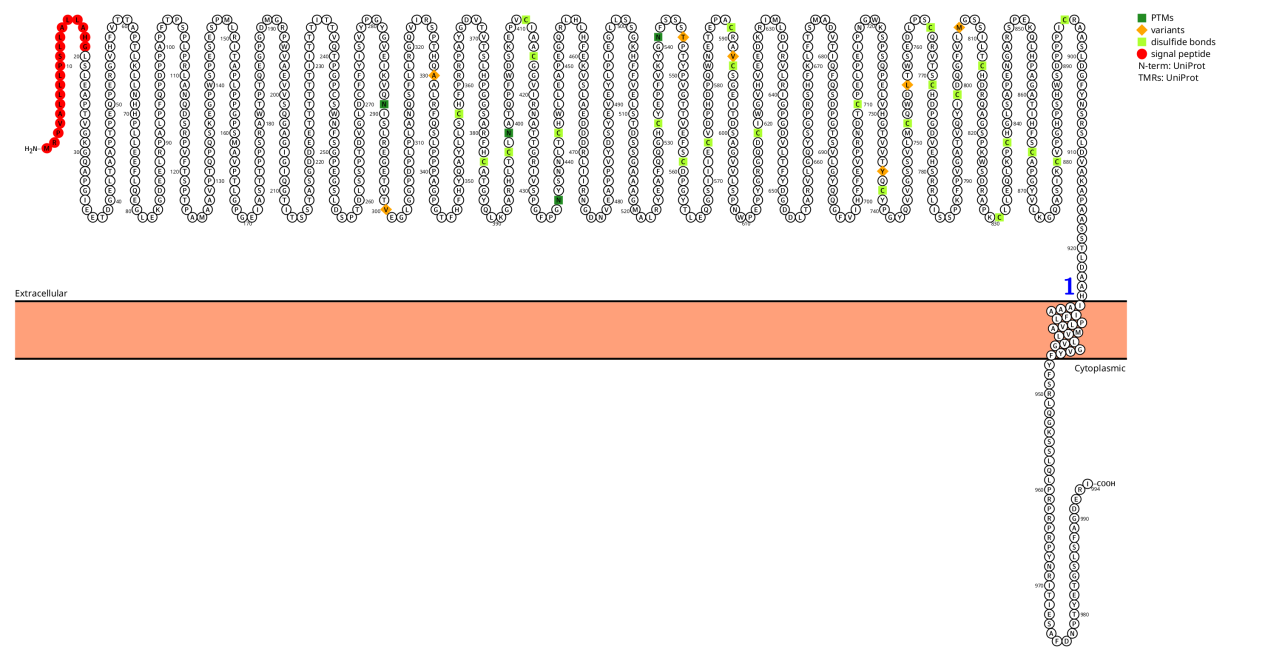
(Data source: protter)
The role of SEZ6 in disease
SEZ6 was first cloned using a seizure model, and its gene mutations are associated with epilepsy, schizophrenia, and Alzheimer's disease. As a substrate of BACE1, it participates in the Aβ metabolic pathway; its deficiency leads to abnormal neuronal dendritic morphology, impaired synaptic function, and decreased short-term memory and cognitive flexibility. ASCL1 drives the upregulation of SEZ6 in neuroendocrine tumors such as SCLC, maintaining the tumor's neuroendocrine phenotype. High SEZ6 expression is associated with advanced stage and extrathyroidal invasion in medullary thyroid carcinoma. In SCLC, expression is not limited to the localized stage; high expression is also maintained in metastatic lesions, making it suitable for targeted intervention in advanced and relapsed/refractory patients. Compared to DLL3, SEZ6 has a higher expression abundance in SCLC, and the two can coexist, indicating potential for combination therapy.

(Data source: Ghaemi B, et al. Cancer Res. 2026)
SEZ6 -targeted therapy
SEZ6 is highly expressed in small cell lung cancer (SCLC) and other neuroendocrine tumors (NENs), including high-grade neuroendocrine tumors (NETs)/neuroendocrine carcinomas (NECs) and central nervous system (CNS) tumors, with limited expression in normal tissues outside the blood-brain barrier. SEZ6 is highly expressed on SCLC tumor cells, and its expression remains stable across disease stages and treatment regimens. SEZ6 has been selected as a target for developing novel antibody-drug conjugates (ADCs) carrying payloads designed to kill neuroendocrine tumor cells. In addition to antibody-drug conjugates, SEZ6 may serve as a potential delivery modality for other novel cancer therapies, such as T-cell connectors, chimeric antigen receptor T (CAR-T) cell therapy, and radiopharmaceuticals.
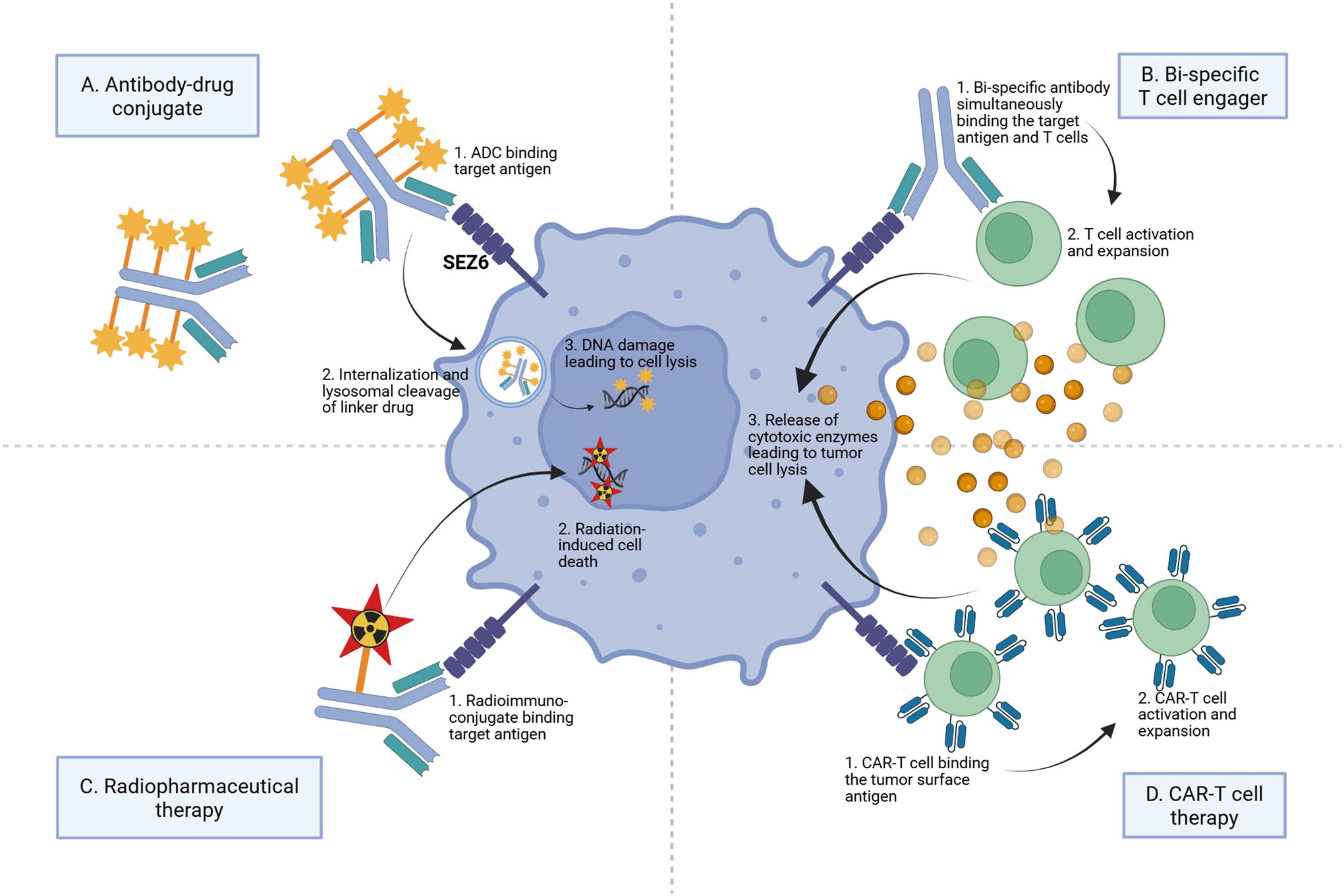
(Data source: Gezelius E, et al. Clin Cancer Res. 2025)
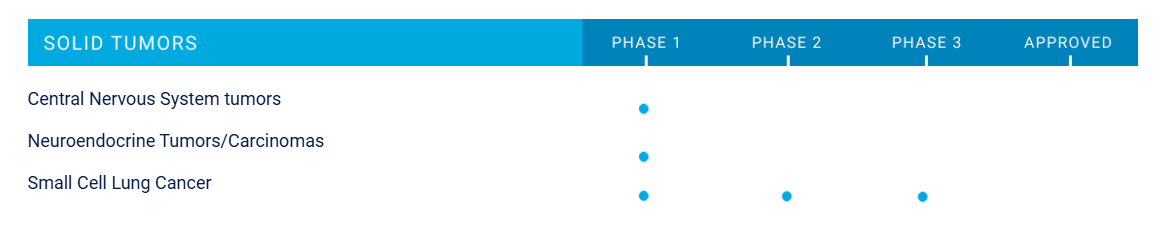
ABBV-011, developed by AbbVie, is the first ADC targeting SEZ6, consisting of the anti-SEZ6 monoclonal antibody SC17 conjugated to a calicheamicin-based payload. A phase I trial of ABBV-011 reported preliminary clinical activity in patients with relapsed or refractory small cell lung cancer (NCT03639194) who had received ≥1 line of platinum-based chemotherapy. In the overall population (N=98), the objective response rate (ORR) and clinical benefit rate (CBR) were 19% and 69%, respectively, with 37% (59 patients) maintaining clinical benefit for at least 12 weeks. The response rate was comparable in the dose-expansion cohort, with an ORR of 25% and a CBR of 65%. Efficacy was observed in patients with ≥2 lines of prior therapy or a treatment-free interval of <90 days, factors considered predictors of poor response to subsequent treatment. The most frequently observed treatment-related adverse events included fatigue (50%), nausea (42%), thrombocytopenia (41%), and decreased appetite (40%). In the overall cohort and dose-expansion cohort, the incidence of ≥ grade 3 hepatotoxicity was 12% and 13%, respectively. Notably, two patients experienced grade 3 venous occlusive disease, which resolved after supportive intervention. No adverse effects on neurological or cognitive function were described in this trial. ABBV-706 is currently undergoing phase II and III trials in small cell lung cancer, as well as a phase I trial for the treatment of advanced solid tumors, including central nervous system (CNS) tumors and neuroendocrine tumors (NETs)/neuroendocrine carcinomas (NECs).
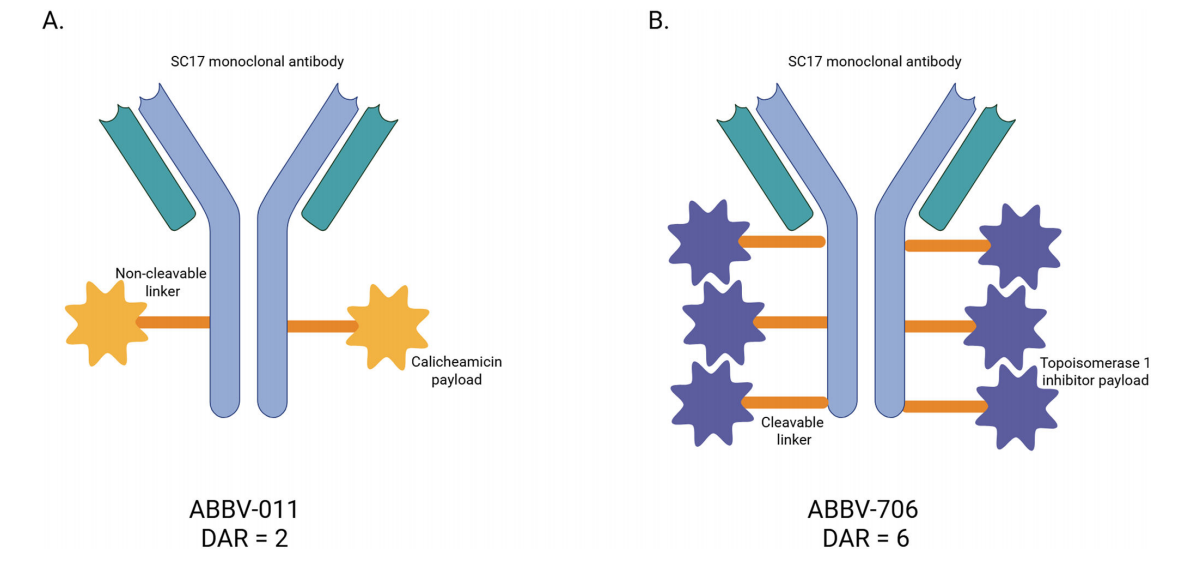
(Data source: Gezelius E, et al. Clin Cancer Res. 2025)
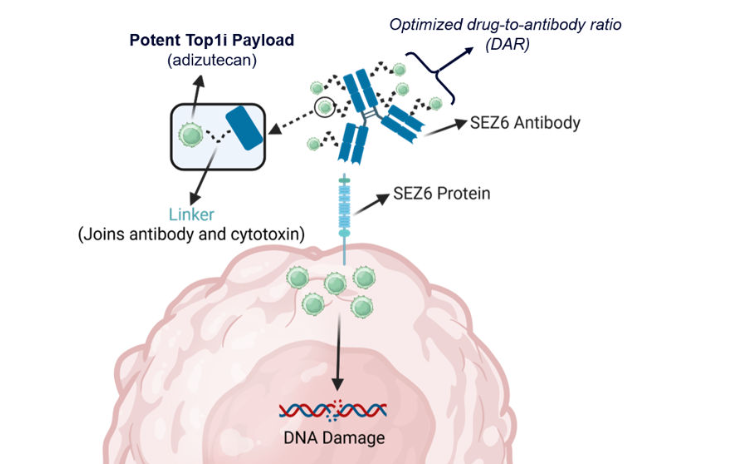
Developed by AbbVie, ABBV-706 consists of the same monoclonal antibody SC17 but uses a topoisomerase I inhibitor as its cytotoxic load. Preclinical evidence suggests that ABBV-706 is superior to ABBV-011 in tumor suppression in SCLC and other neuroendocrine carcinoma models expressing SEZ6. In the first human study (NCT05599984) that included SCLC (N=23), other neuroendocrine tumors (N=25), and high-grade CNS tumors (N=5), the demonstrated ORR was 43.8% and the CBR was 91.7% across the entire cohort (67). Subgroup analysis by tumor type showed an ORR of 60.9% and a NEN of 28% for SCLC. No response was observed in 5 patients with primary central nervous system tumors. Adverse events were predominantly hematological, including anemia (60%), neutropenia (49%), thrombocytopenia (38%), and fatigue (66%). No neurotoxicity or hepatotoxicity was reported in this early trial, and the favorable properties of ABBV-706 led to the cessation of development of ABBV-011.
(Data source: AbbVie official website)
HWK-206 is Whitehawk Therapeutics An antibody-drug conjugate targeting SEZ6 and TOP1 has been developed, employing a dual-epitope binding (or dual-targeting) strategy, which is expected to improve ADC internalization and efficacy. HWK-206 is currently the only dual-targeting ADC in development for small cell lung cancer. In preclinical models, HWK-206 has shown potential to outperform existing treatments and other single-epitope ADCs in development.
