Dimerized collagen receptor 1 (DDR1) is a collagen-activated receptor tyrosine kinase that regulates multiple cellular processes (cancer cell adhesion, migration, and metabolic reprogramming, while also modulating cancer-associated fibroblasts, macrophages, and neutrophils) to remodel the tumor immune microenvironment (TIME).
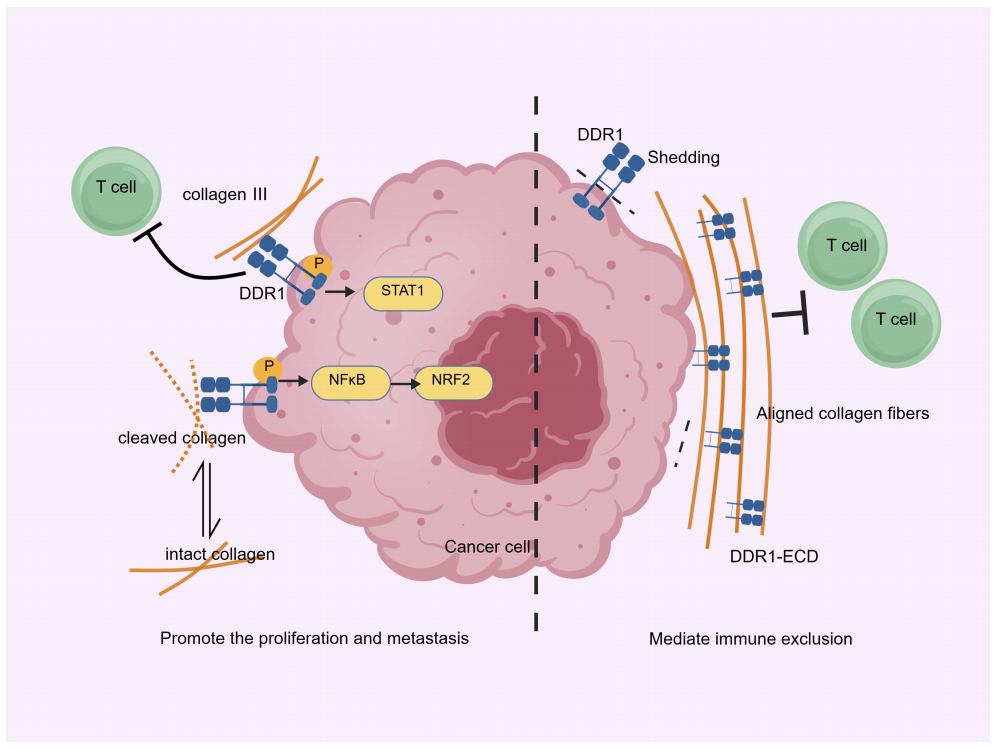
(Data source: Xu X, et al. Front Immunol. 2026)
DDR1 expression distribution
DDR1 is primarily expressed in epithelial cells of various tissues, including keratinocytes, bronchial epithelial cells, alveolar epithelial cells, intestinal epithelium, and glomerular epithelial cells. DDR1 is also expressed in other cell types, such as vascular smooth muscle cells, endothelial cells, fibroblasts, and oligodendrocytes in the nervous system. The asymmetrically arranged cell membranes of epithelial cells, with apical and basal sides, are crucial for maintaining physiological homeostasis in many organs.
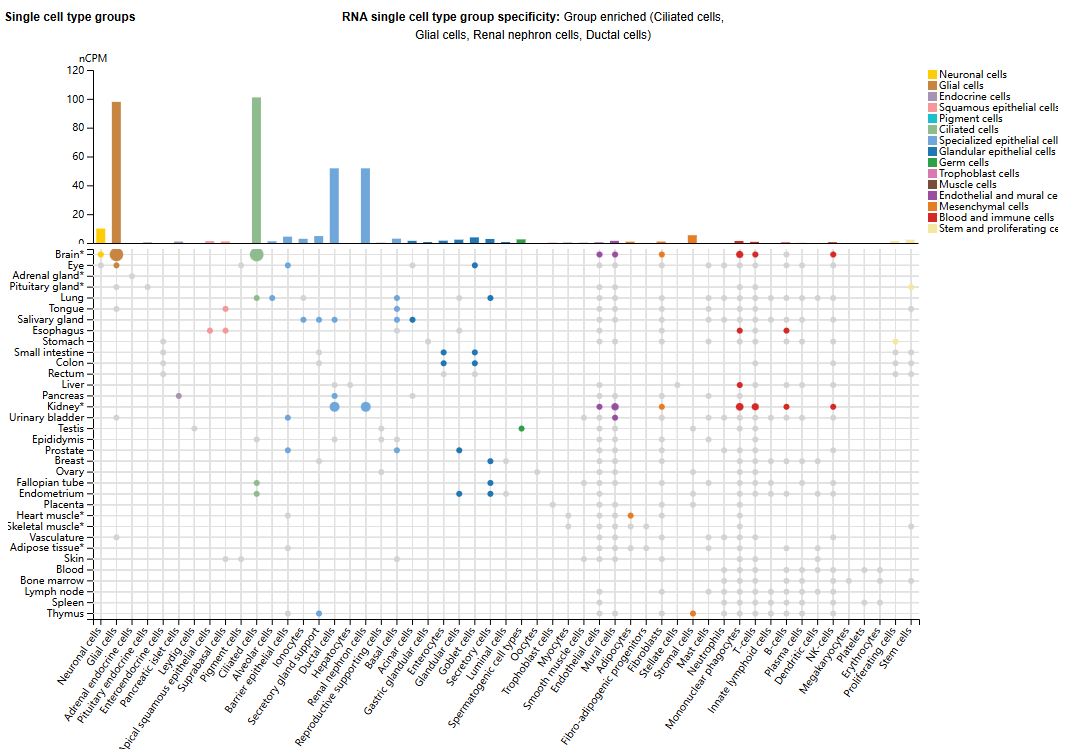
(Data source: uniprot)
Compared to normal tissues, DDR1 is highly expressed in a variety of tumors, including BLCA, BRCA, CHOL, ESCA, and HNSC. Abnormal expression of DDR1 can lead to the development of a range of tumors, including gastric cancer, liver cancer, colon cancer, pancreatic cancer, breast cancer, lung cancer, ovarian cancer, prostate cancer, and glioblastoma.
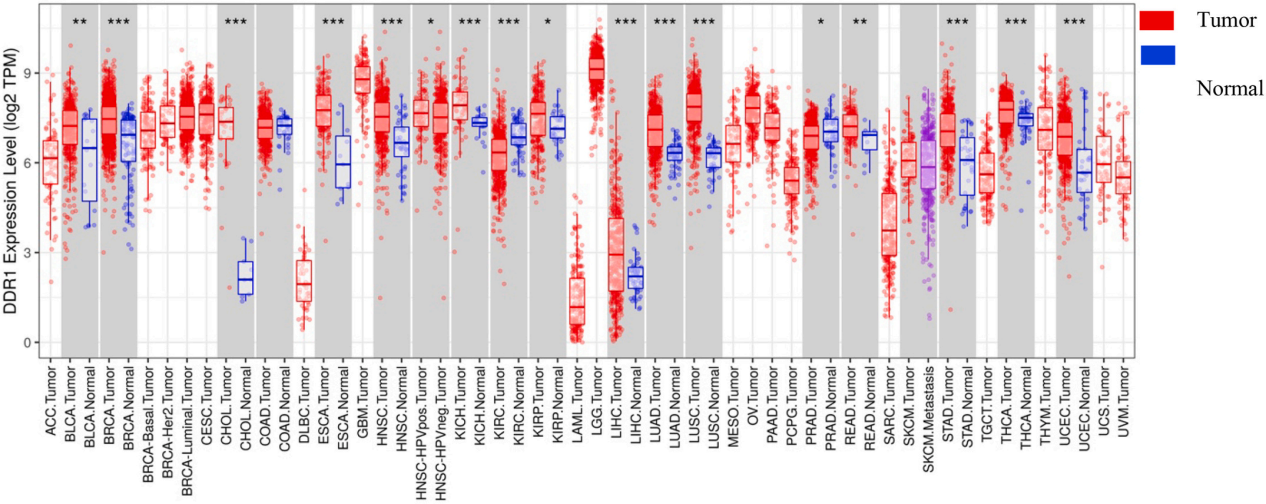
(Data source: Tian Y, et al. Biochim Biophys Acta Rev Cancer. 2023)
The structure of DDR1 and its receptor
The DDR family is a class of single-transmembrane proteins composed of an extracellular N-terminal discoid homology (DS) domain and DS-like domain, a membrane adjacent domain, and a C-terminal tyrosine kinase domain. DDR1 exists in five splice variants generated by alternative splicing, including DDR1a, DDR1b, DDR1c, DDR1d, and DDR1e. DDR1a, DDR1b, and DDR1c encode full-length receptors containing intracellular kinase domains, while DDR1d and DDR1e are truncated variants lacking kinase activity.
DDR1 binds to type I-IV and type VIII collagen via its DS domain. After binding to triple-helical collagen, DDR1 forms tightly packed clusters and then undergoes transdimeric autophosphorylation between adjacent dimers.
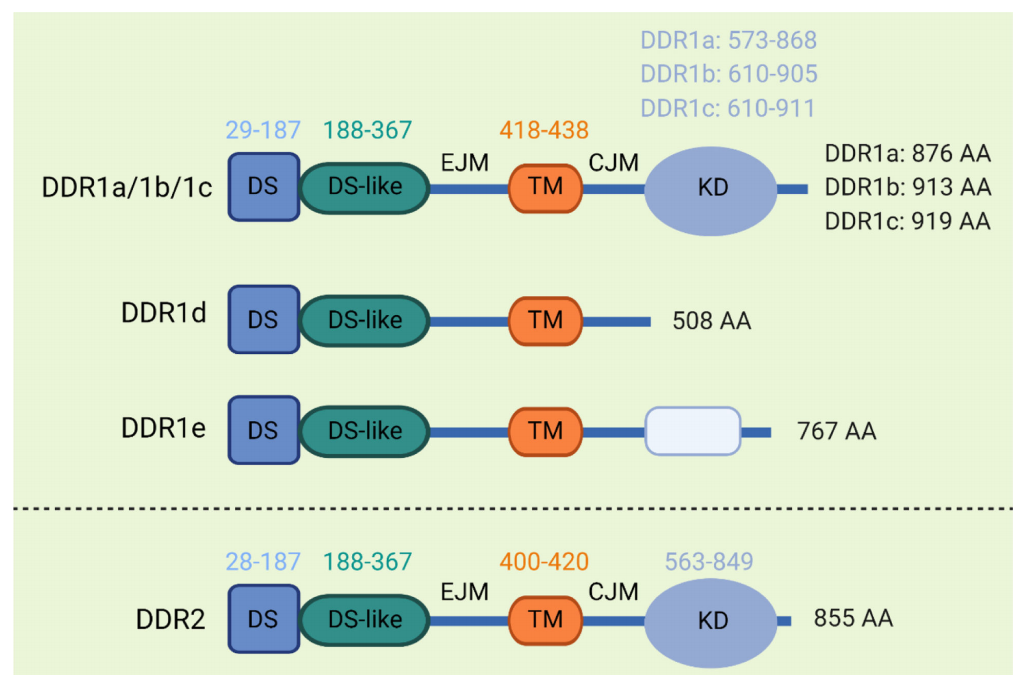
(Data source: Su H, et al. Trends Cell Biol. 2024)
DDR1 signal transduction in cancer
The role of DDR1 in PDAC: COL I activates DDR1-PYK2 and α2β1 integrin-FAK to stimulate cell proliferation and metastasis. Both receptor complexes depend on the p130 CAS-RAP1-JNK1-c-Jun cascade. COL VIII promotes PDAC progression via the DDR1-PI3K-AKT and integrin-FAK-NF-κB cascade. cCOL I activates the NF-κB-p62-NRF2-TFAM module by binding to DDR1, stimulating MP, mitochondrial biogenesis, bioenergy, inflammation, and tumor growth, while iCOL I has the opposite effect by causing DDR1 degradation. cCOL I-DDR1 signaling induces CXCL5 expression via the PKCθ-SYK-NF-κB signaling cascade, thereby modulating the tumor microenvironment. Tumor cell-derived α1(I) homotrimers activate DDR1 and α3β1 integrins and suppress tumor immunity via the FAK-PI3K-AKT pathway.
TNBC: In the TNBC mouse model, COL-induced DDR1 outer domain (ECD) shedding leads to wavy COL fiber arrangement, thereby inhibiting T cell infiltration. In the human TNBC model (MDA-MB-231), COL III activates DDR1, which in turn maintains the production of wavy COL III by activating STAT1, thus limiting cancer cell proliferation. In the Luminal BCa model, DDR1 inhibition promotes tumor growth through an unknown mechanism.
HNSC: DDR1 promotes tumor growth in response to COL VIII and COL XI. Tumor-derived wavy COL III maintains tumor dormancy through the DDR1-STAT1 signaling pathway.
HCC: cCOL I-activated DDR1 promotes tumor survival through the PI3K-AKT pathway and the PSD4-ARF6-p38-ERK-c-Jun cascade. COL XV downregulates DDR1 expression through an unknown mechanism.
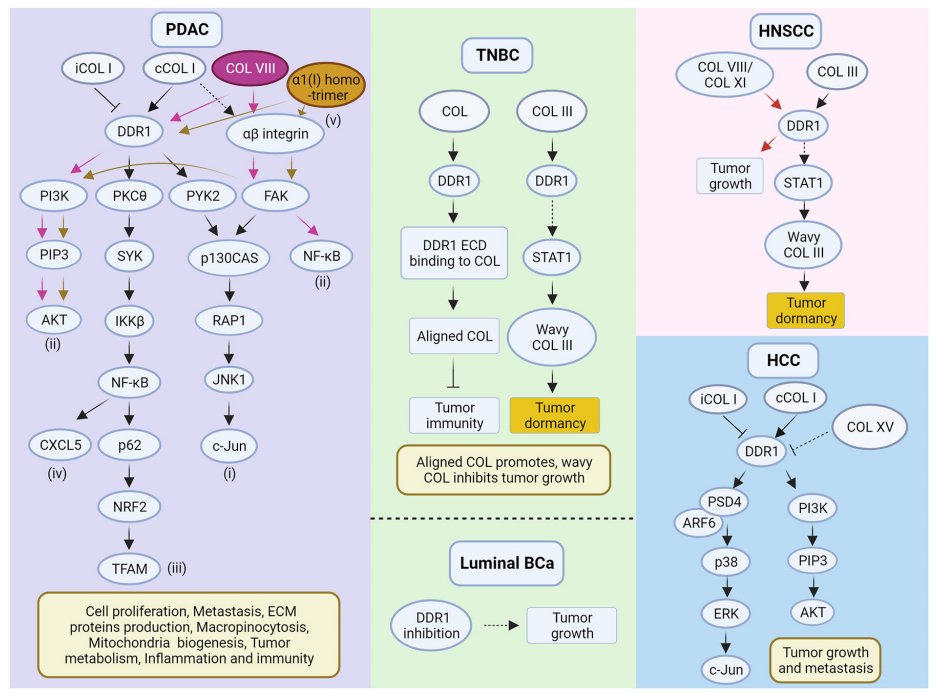
(Data source: Su H, et al. Trends Cell Biol. 2024)
The role of DDR1 in tumor immune escape
Regulation of T cell function: DDR1 suppresses anti-tumor immunity through physical repulsion and direct functional regulation of immune cells. In cancer cells, DDR1 activation inhibits T cell function by releasing immunosuppressive cytokines and upregulating PD-L1 expression. Simultaneously, DDR1 within T cells promotes T cell migration and proliferation.
Direct regulation of immunosuppressive cell function: DDR1 is expressed during the differentiation of human monocytes into macrophages. In inflammatory responses, activation of the collagen-binding DDR1b isoform promotes human macrophage differentiation and increases the production of cytokines/chemokines, including IL-8, macrophage inflammatory protein-1α (MIP-1α), and MCP-1, in a p38-mitogen-activated protein kinase (MAPK)-dependent manner.
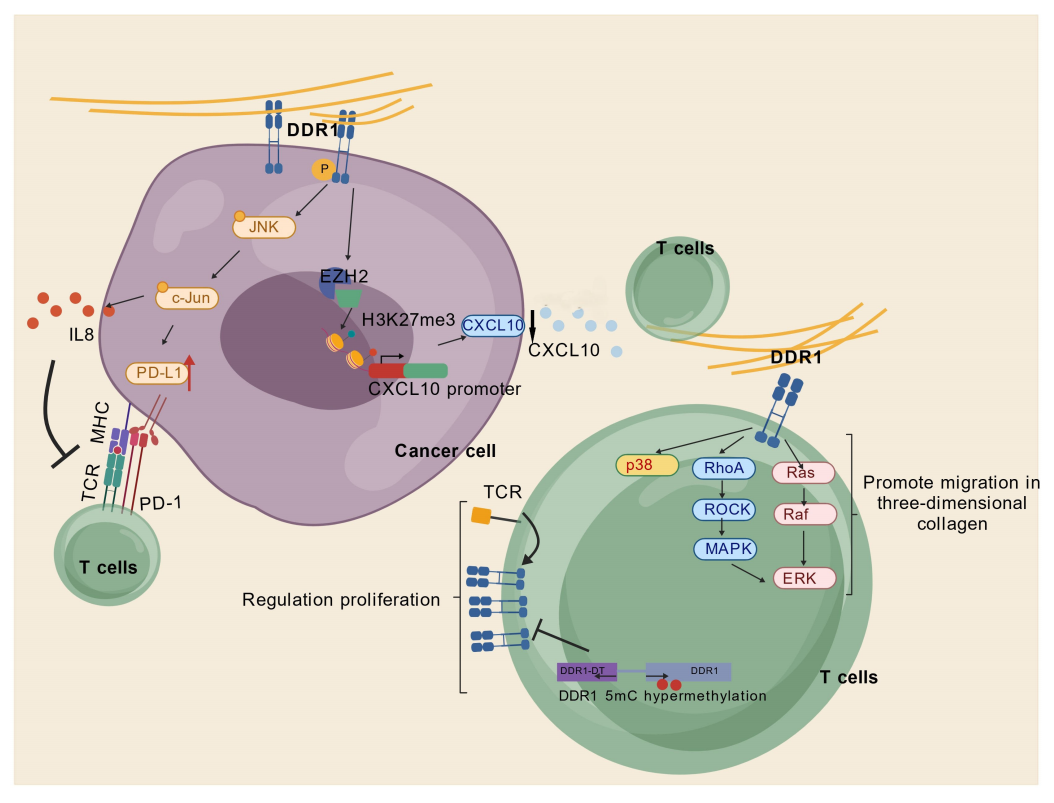
(Data source: Xu X, et al. Front Immunol. 2026)
DDR1 plays multiple environment-dependent functions across various cellular compartments. In tumor cells, DDR1 mediates both kinase-dependent intracellular signaling cascades and extracellular domain (ECD)-dependent kinase-independent functions, including MMP-dependent release of soluble DDR1-ECD, collagen fiber alignment, and the formation of a physical immune barrier via NMIIA/TRPV4. In the stromal compartment, DDR1 regulates cancer-associated fibroblasts (CAFs), vascular smooth muscle cells (VSMCs), endothelial cells, and hepatic stellate cells (HSCs) to drive extracellular matrix remodeling, mechanosensing, pro-inflammatory cytokine secretion, and angiogenesis. In the immune compartment, intrinsic DDR1 regulates T cell 3D collagen migration and promotes M2-like polarization of tumor-associated macrophages (TAMs); tumor cell-derived CXCL5 recruits neutrophils downstream of DDR1 and triggers NET formation to support metastasis. Different collagen states determine whether DDR1 drives tumor suppression or tumor promotion.
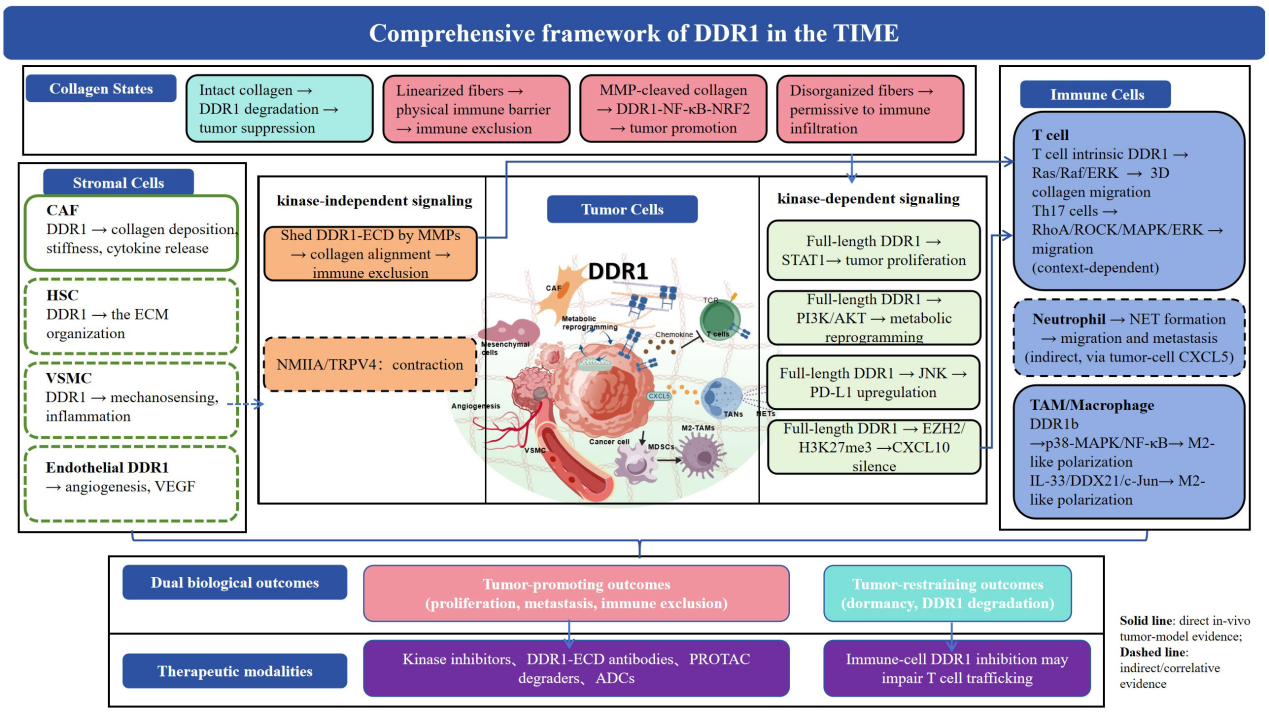
(Data source: Xu X, et al. Front Immunol. 2026)
Targeted therapy for DDR1
Due to the role of DDR1 in solid tumors, many drugs have been developed to target DDR1, such as ADCs, monoclonal antibodies, and small molecule chemical drugs.
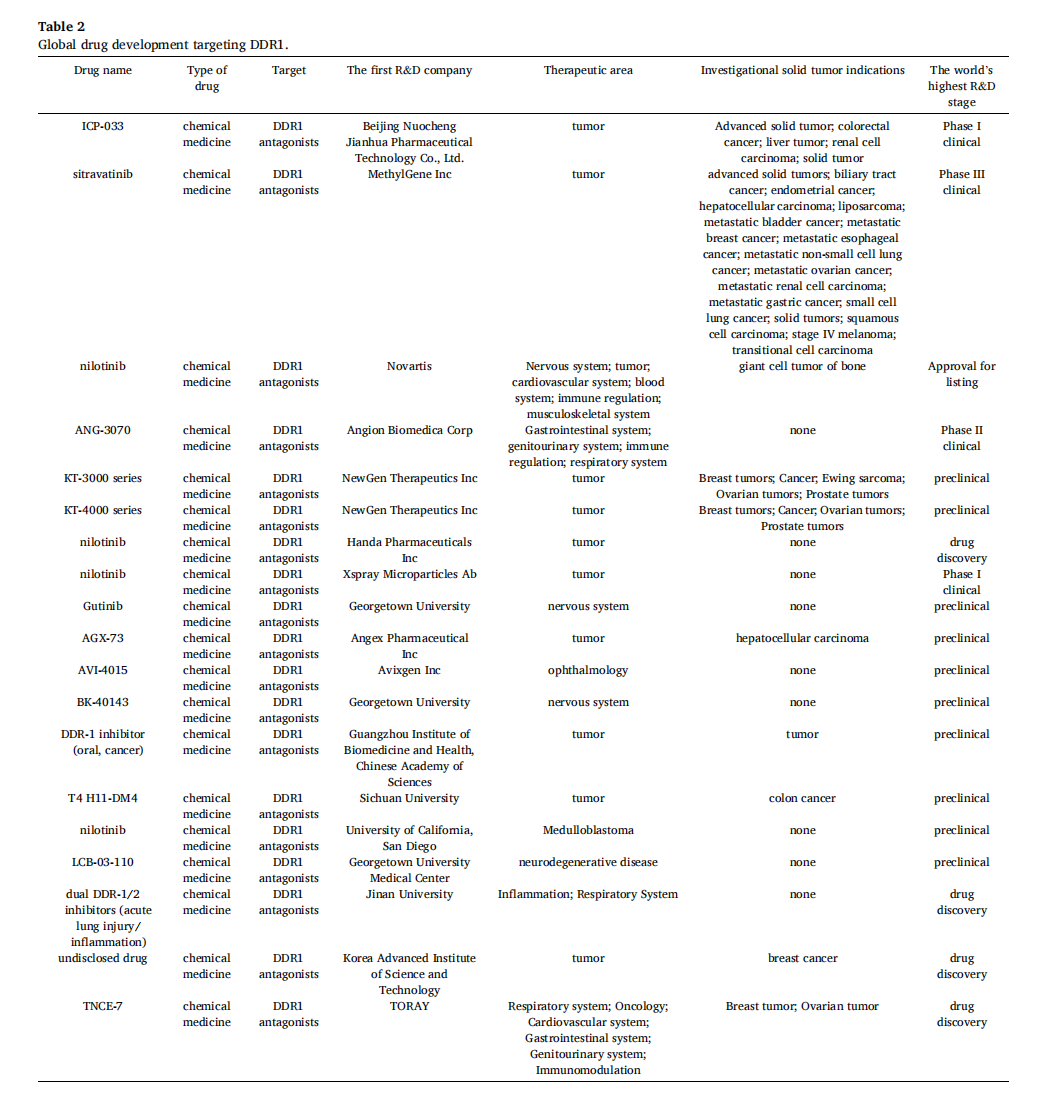
(Data source: Tian Y, et al. Biochim Biophys Acta Rev Cancer. 2023)
IM-1617 is an antibody-drug conjugate targeting ROR1, developed by Immunome for the treatment of solid tumors. Preclinical in vivo efficacy studies have shown that a single clinically relevant dose of IM-1617 can achieve tumor regression in tumor models derived from melanoma, esophageal cancer, colorectal cancer, non-small cell lung cancer, and other solid tumors. A preliminary study in non-human primates found its toxicity to be consistent with TOP1-loaded drugs, suggesting a broad therapeutic window.
PRTH-101 is a monoclonal antibody targeting DDR1 for the treatment of advanced malignant solid tumors, metastatic solid tumors, and non-small cell lung cancer. In preclinical studies, it can improve immune cell infiltration by altering collagen fiber arrangement. It is currently in Phase I clinical trials, and clinical efficacy cannot be inferred from this.
T4H11-DM4 (a maytansinoid microtubule inhibitor) is an antibody-drug conjugate (ADC) targeting DDR1, currently in preclinical research. It has achieved complete tumor regression in an oxaliplatin-resistant xenograft model. The DM4 payload induces mitotic arrest and apoptosis. By targeting resistance-associated antigens, this strategy can directly kill refractory cells. ADCs have shown promise in treating chemotherapy-resistant CRC patients, but further research is needed to determine their full therapeutic potential.
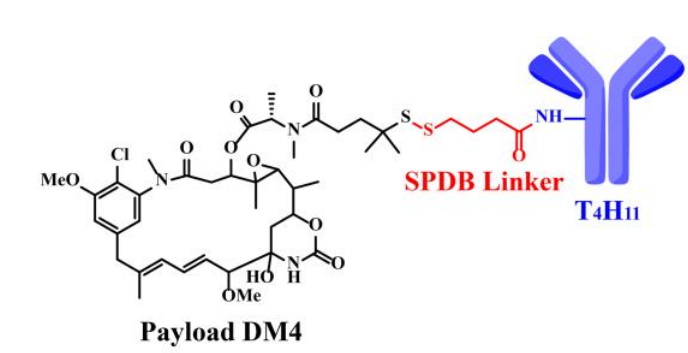
(Data source: Tao Y, et al. Mol Oncol. 2019)
