CC-type chemokine 11 (CCL11) is a chemokine that plays a central role in both allergic and non-allergic inflammatory responses by inducing the migration of various leukocyte types, including eosinophils, basophils, macrophages, and dendritic cells. It primarily exerts its effects by binding to the CCR3 receptor. It also induces chemotaxis in endothelial cells and promotes angiogenesis by activating the PI3K/Akt pathway. CCL11 has a dual role in cancer, both promoting and inhibiting tumor growth.
(Data source: Wang J, et al. Int J Mol Sci. 2025)
CCL11 expression distribution
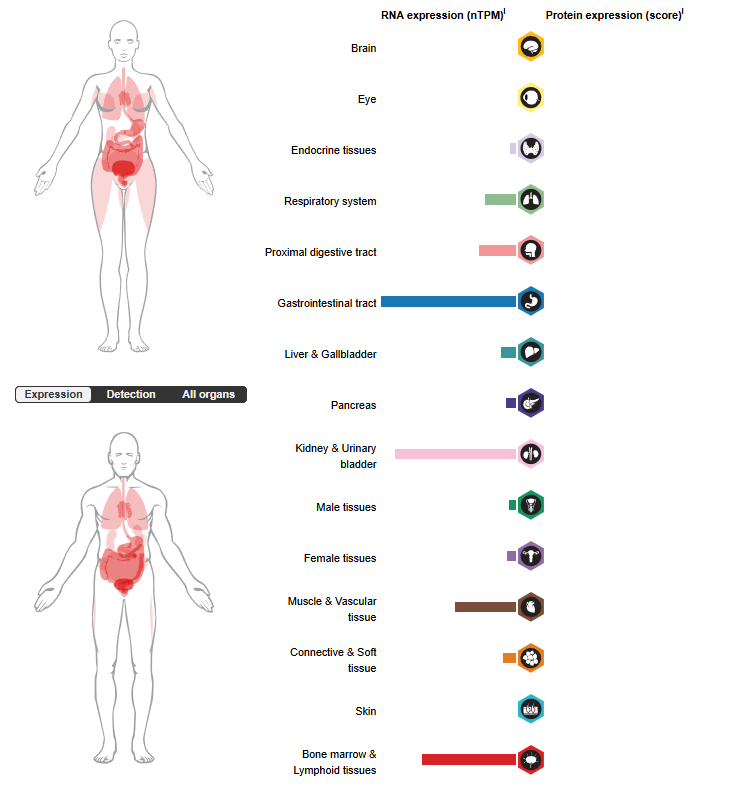
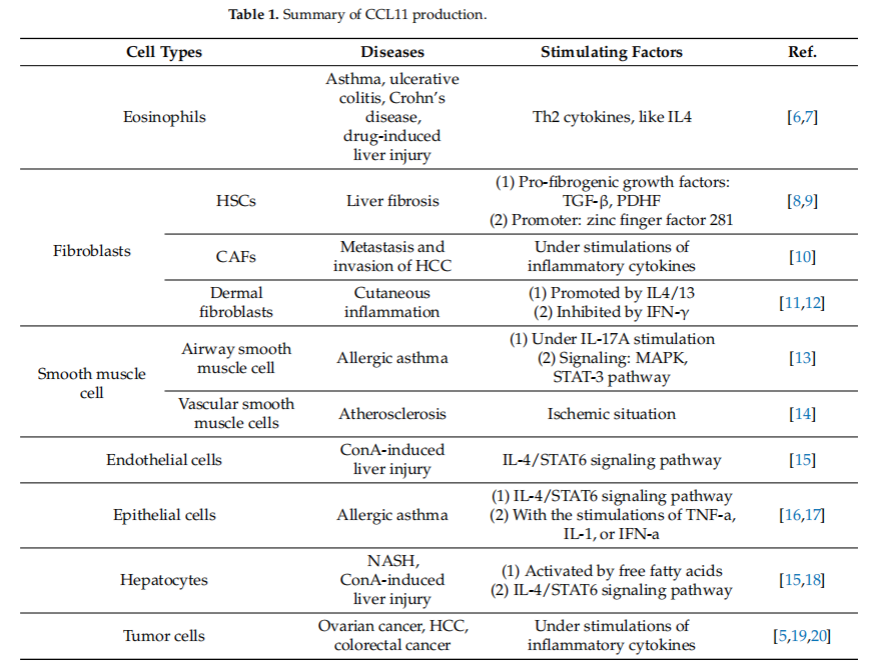
CCL11 exhibits a tissue-specific expression pattern, with particularly high levels observed in the heart, kidneys, small intestine, colon, and pancreas, and lower levels in the liver, lungs, ovaries, and placenta. This chemokine is synthesized by multiple cell types, including eosinophils, fibroblasts, endothelial cells, macrophages, B lymphocytes, and chondrocytes. Its expression is tightly regulated by a cytokine network, upregulated by Th2-related cytokines (IL-4, IL-10, IL-13, and IL-17) and downregulated by Th1 cytokines such as IFN-γ.
CCL11 production is not limited to stromal cells, but is also present in tumor cells of various malignant tumors, including ovarian cancer, hepatocellular carcinoma, and colorectal cancer. Tumor-derived CCL11 establishes an autocrine signaling circuit that enhances the proliferation and invasive potential of malignant cells.
(Data source: uniprot)
(Data source: Wang J, et al. Int J Mol Sci. 2025)
CCL11 structure
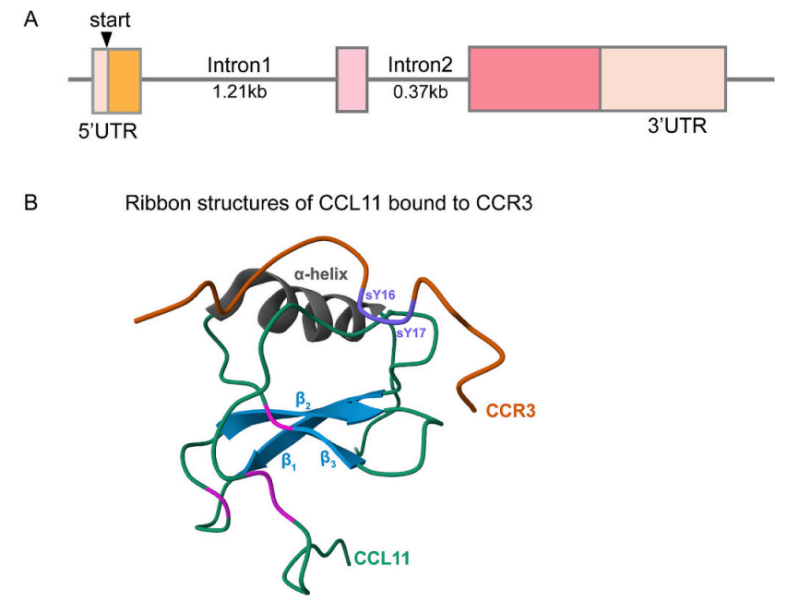
The CCL11 gene, located on chromosome 17q21.1-q21.2, encodes a 97-amino acid precursor protein. Post-translational modification, involving the removal of the first 23 amino acids (74 amino acid residues), produces the functional CCL11. The three-dimensional structure of CCL11 is characterized by three β-sheets and one C- terminal α-helix, forming a characteristic chemokine structure stabilized by two disulfide bonds. The N- terminal portion of CCL11 is a key factor in its interaction with its receptor. At the protein sequence level, mature human CCL11 shares approximately 60% homology with mature mouse and guinea pig CCL11.
(Data source: Zhao X, et al. Biochem Pharmacol. 2025)
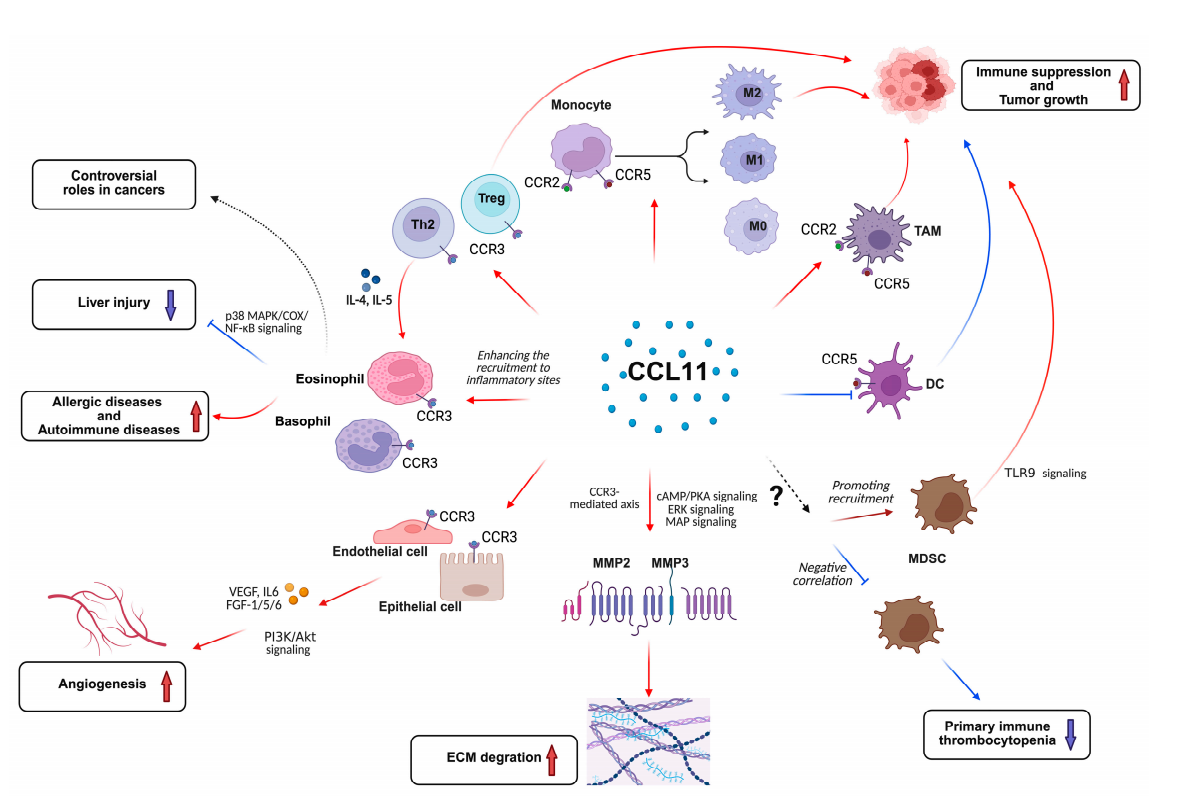
CCL11 has three receptors: CCR2, CCR3, and CCR5. CCR3 is the main high-affinity receptor for CCL11, which mediates the recruitment and activation of eosinophils at sites of inflammation.
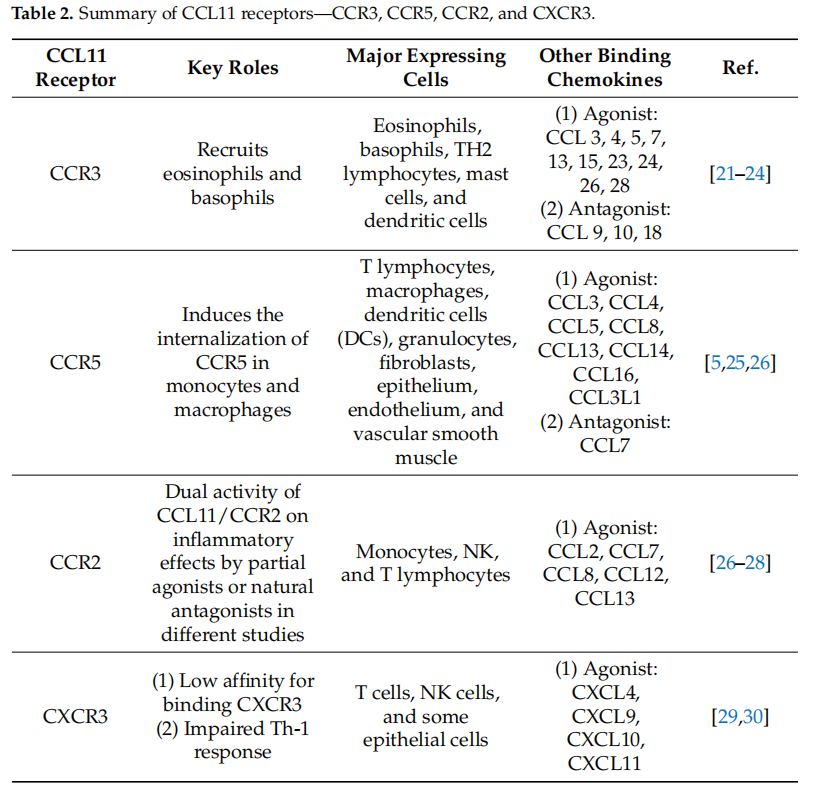
(Data source: Wang J, et al. Int J Mol Sci. 2025)
The role of CCL11 in cancer
CCL11 plays a dual role in cancer, functioning through both tumor-promoting and tumor-suppressing mechanisms. Its capacity to facilitate inflammation-driven transformation, tumor growth, metastasis, angiogenesis, and immune evasion underscores its oncogenic potential. CCL11 enhances cancer stem cell-like properties and induces epithelial-mesenchymal transition (EMT), thereby driving inflammation-associated transformation, tumor proliferation, migration, and invasion. By interacting with the CCR3 receptor on the surface of vascular endothelial cells, CCL11 activates the PI3K/AKT signaling pathway, which triggers endothelial cell migration. It may also influence vascular permeability—and consequently promote angiogenesis—by stimulating tumor cells to secrete matrix metalloproteinases (MMPs). Furthermore, CCL11 can recruit CD4+CD25+Foxp3+ regulatory T cells (Tregs), as well as neutrophils and macrophages (promoting the polarization of the latter toward an M2-like phenotype), all of which serve to suppress anti-tumor immune responses. Conversely, CCL11 exerts a tumor-suppressive effect in breast cancer (BRCA) and pancreatic ductal adenocarcinoma (PDAC). In BRCA, it inhibits the proliferation, migration, and invasion of tumor cells, while in PDAC, it recruits eosinophils that exert anti-tumor effects. The term "stem cell-like properties" refers to the capacity of cancer cells to exhibit characteristics similar to those of stem cells, including the ability to self-renew and the potential for multidirectional differentiation.
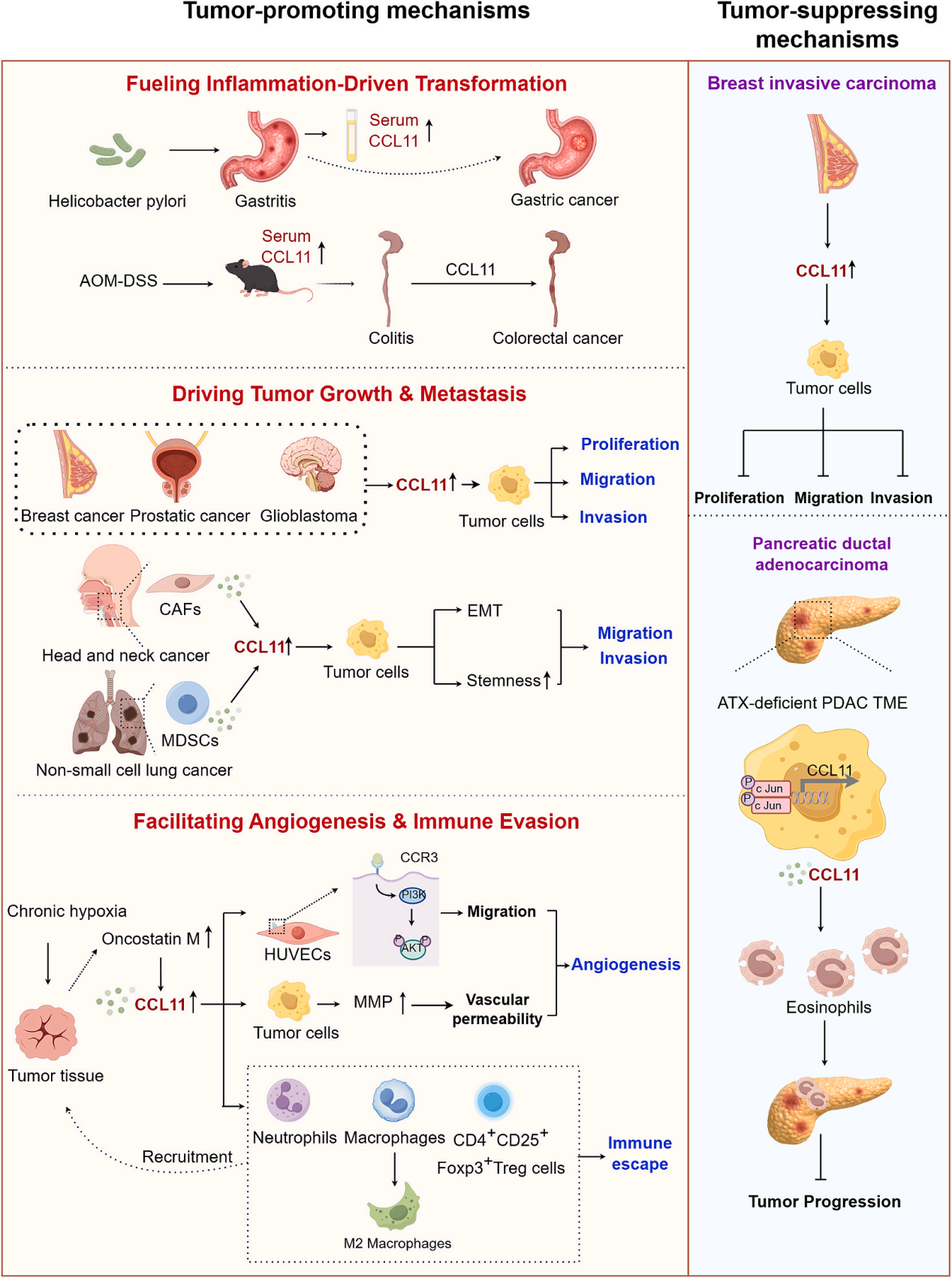
(Data source: Zhao X, et al. Biochem Pharmacol. 2025)
CCL11 targeted therapy
Bertilimumab (CAT-213) is a humanized anti-CCL11 monoclonal antibody developed by iCo Therapeutics using phage display technology, initially intended for the treatment of allergic diseases. In cancer, studies have shown that pharmacological inhibition of the CCL11 signaling pathway enhances chemosensitivity, as demonstrated by improved cisplatin response in an ovarian cancer model. By binding to this chemokine, Bertilimumab inhibits the migration of eosinophils to the skin. Currently, this drug is not approved for the treatment of any other diseases. However, the U.S. Food and Drug Administration (FDA) recently granted Bertilimumab "orphan drug" designation for the treatment of essential hypertension (BP). In a phase II open-label clinical trial (NCT02226146) in newly diagnosed patients with moderate to severe essential hypertension, disease severity decreased by 81% after 13 weeks of Bertilimumab treatment. Subjects received only three doses of Bertilimumab (days 0, 14, and 28). The drug was well tolerated, indicating that Bertilimumab is a safe, effective, and well-tolerated treatment for essential hypertension.
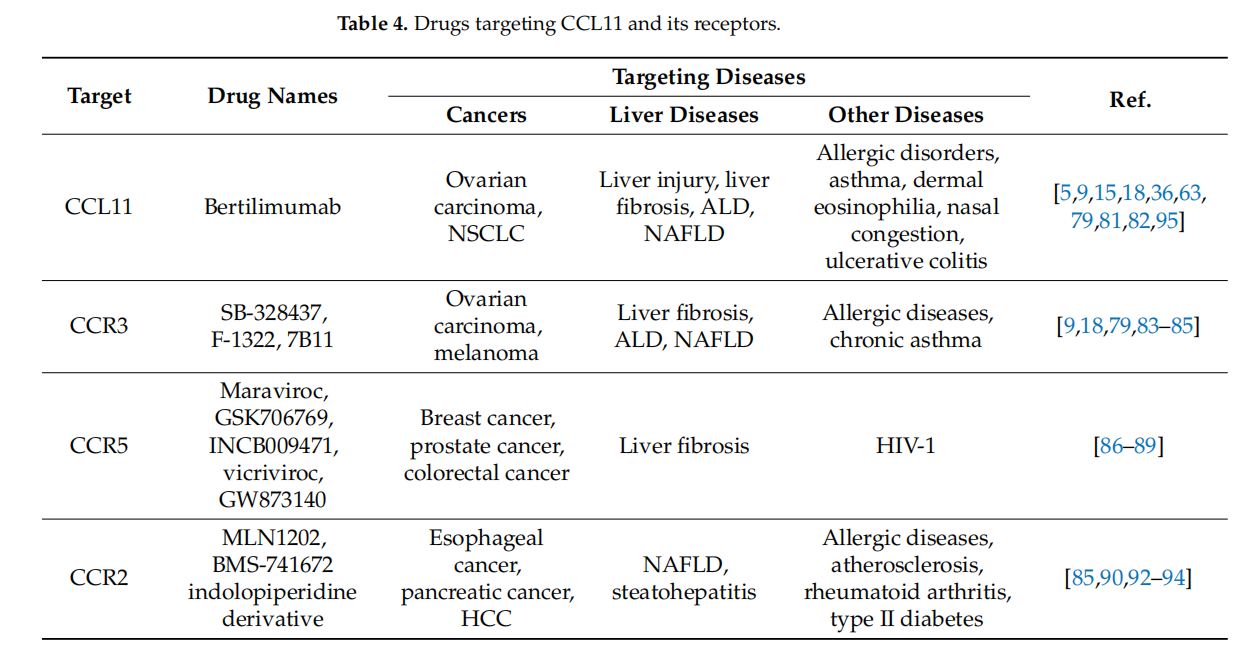
(Data source: Wang J, et al. Int J Mol Sci. 2025)
