CC-type chemokine 17 (CCL17) is a chemokine, also known as SCYA17 or TARC, that exhibits chemotactic activity towards T lymphocytes, preferentially acting on Th2 cells but not on monocytes or granulocytes. It exerts its effects by binding to CCR4 on the surface of T cells, playing a crucial role in a wide range of inflammatory and immune processes.
CCL17 expression distribution
CCL17 is constitutively expressed in the thymus and participates in the development, differentiation, and selection of T cells within the thymus. Under homeostasis, its expression is low in peripheral tissues, but its secretion is rapidly upregulated after inflammatory stimulation. Studies have confirmed that CCL17 is expressed in various cell types, including dendritic cells (DCs), keratinocytes, fibroblasts, endothelial cells, and macrophages. CCL17 production is influenced by multiple factors, such as cytokines, chemokines, and specific drugs. Notably, cytokines such as GM-CSF, IL-4, and IFN-γ have been shown to regulate CCL17 expression in different immune cells, highlighting the complex network mechanisms regulating CCL17 production.
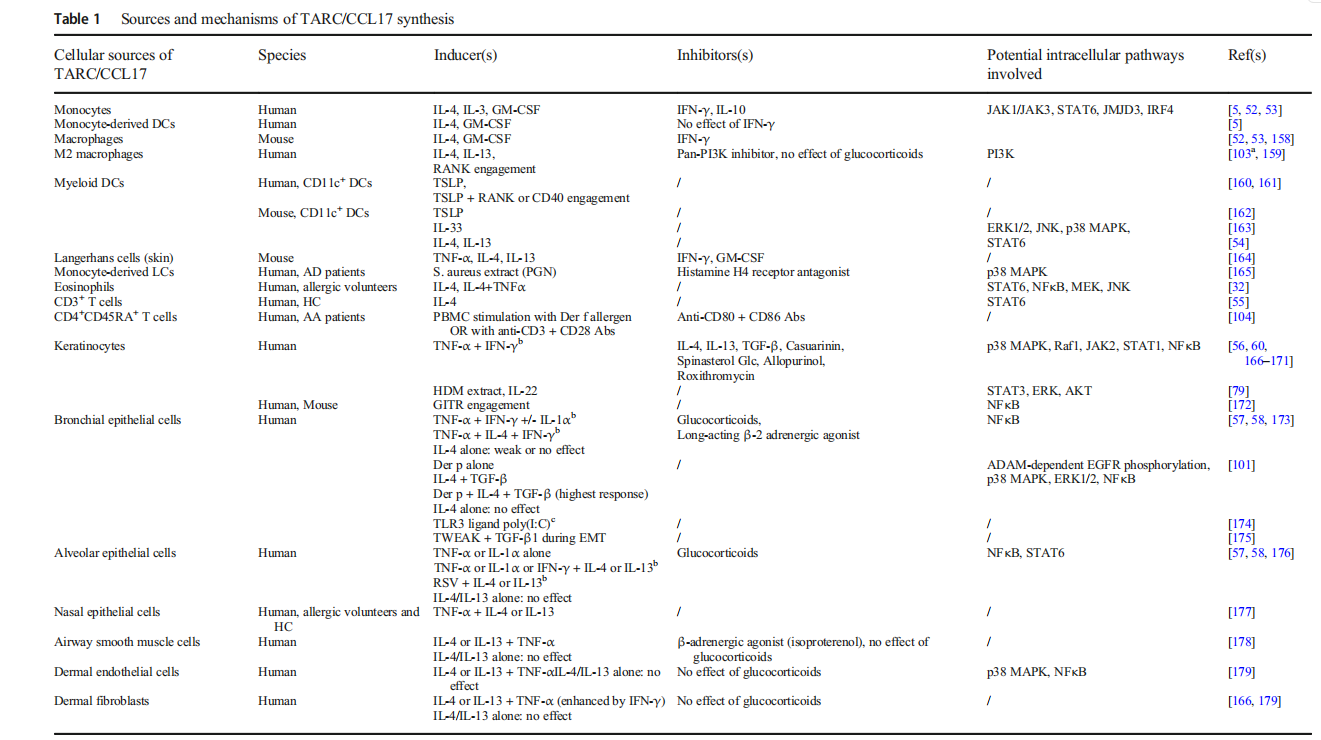
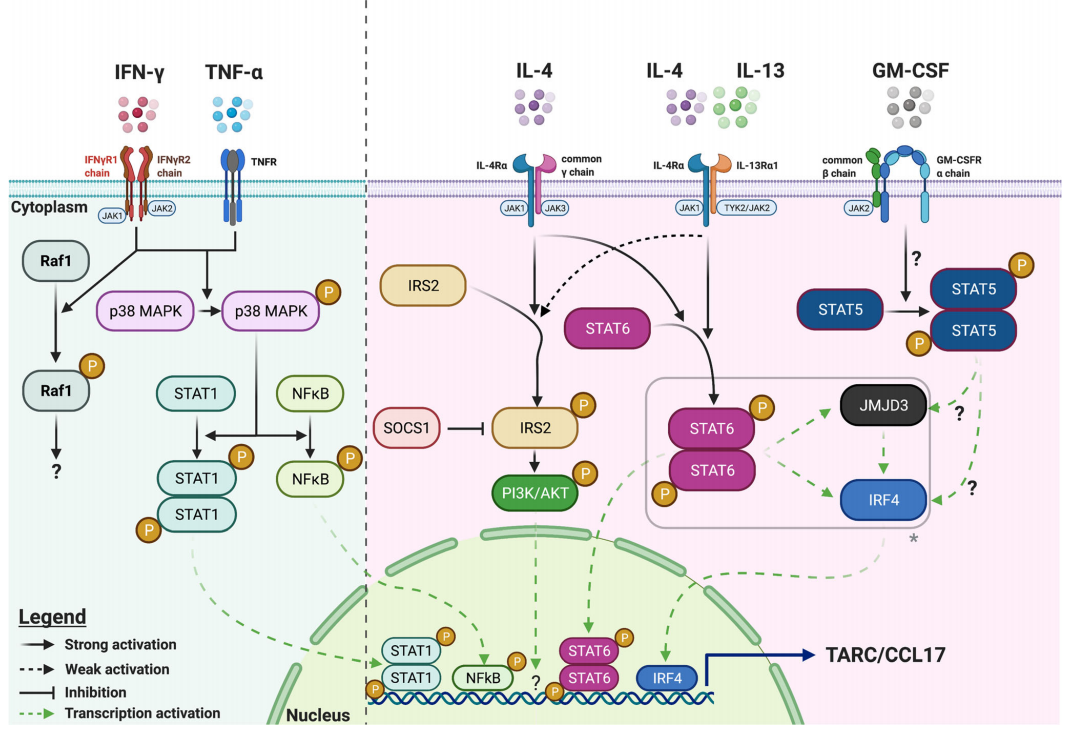
(Data source: Catherine J, et al. Semin Immunopathol. 2021)
The structure of CCL17 and its receptor
The CCL17 gene is located on human chromosome 16q13 and encodes a precursor protein containing a signal peptide. After the signal peptide is cleaved, a mature secreted protein of approximately 71 amino acids is formed. It belongs to the CC chemokine subfamily, and its N-terminal chemokine active region and receptor-binding domain are relatively conserved. It has high homology with CCL22, and both can bind to CCR4.
Structurally, CCL17 typically exists as a homodimer containing characteristic left-handed helical disulfide bonds, which stabilize the dimer interface and maintain a chemotactic conformation. This dimer structure facilitates its effective interaction with CCR4, thereby regulating downstream immune cell migration and local inflammatory responses.
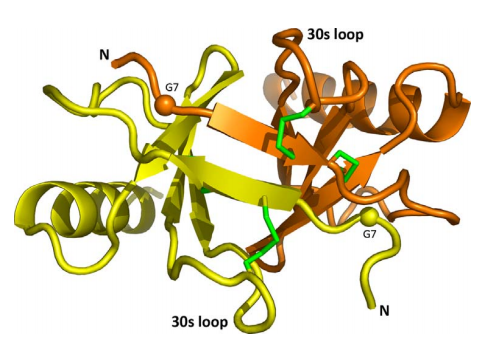
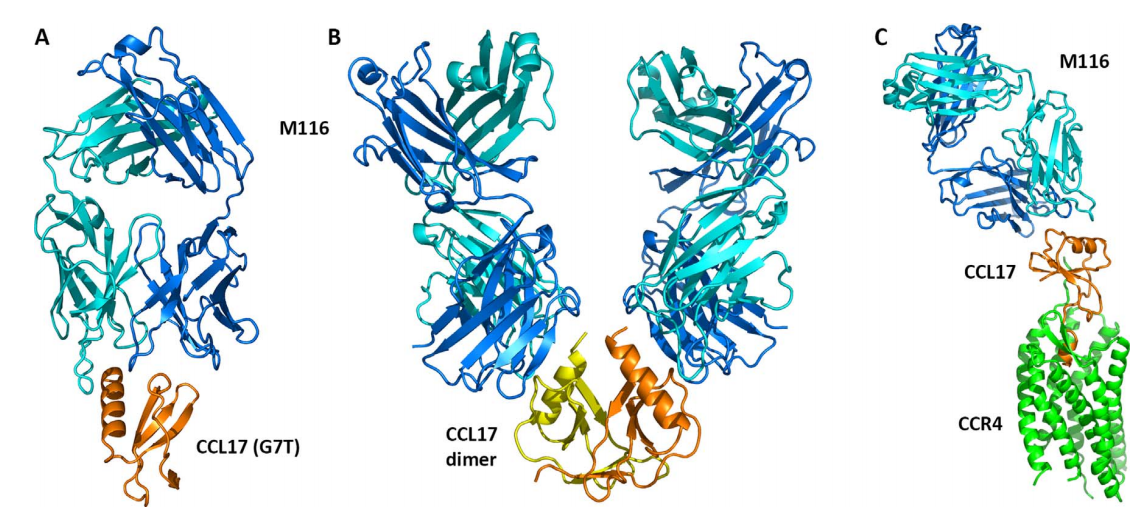
(Data source: Teplyakov A, et al. Biochem Biophys Rep. 2017)
The role of CCL17 in disease
The CCL17-CCR4 axis is a core pathway for Th2-type inflammation, autoimmune diseases, and tumor immunosuppression. Serum CCL17 can serve as an active biomarker for multiple diseases.
In yeast polysaccharide-induced inflammatory arthritis, pain is driven by elevated GM-CSF levels. This enhances JMJD3 demethylase activity, thereby promoting IRF4 expression in macrophages. Subsequently, macrophages produce CCL17, which binds to CCR4, leading to arthritic pain. Downstream of CCL17, arthritic pain is dependent on NGF, GCRP, substance P, IL-23, and COX-2. In a model of neuropathic pain caused by chronic vascular compression injury, administration of the CCR4 antagonist CO21 induces analgesia and inhibits microglial activation and upregulation of the pro-pain cytokines IL-1β and IL-18. In a postoperative incision pain model, dendritic cells in the epidermis produce CCL17 and CCL22, which directly act on CCR4 expressed on peripheral sensory neurons, thereby increasing action potential frequency and initiating pain signal transduction.
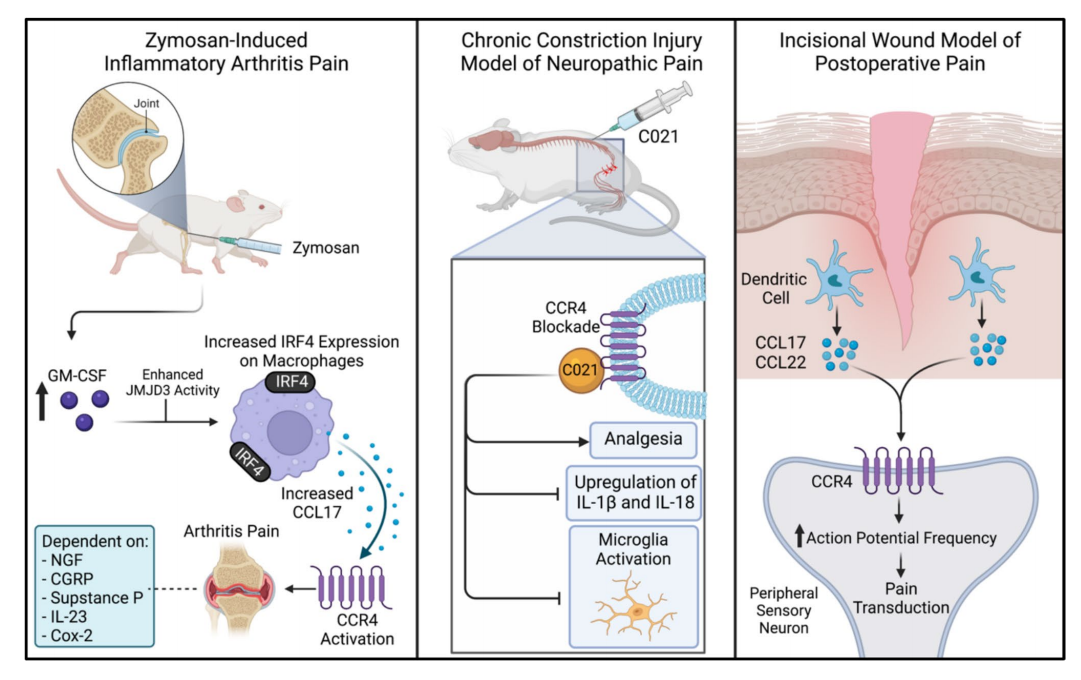
(Data source: Hasheminia A, et al. Mol Neurobiol. 2025)
CCL17 is expressed by intestinal dendritic cells (DCs), and its expression is significantly enhanced in colitis associated with inflammatory bowel disease (IBD). CCL17 deficiency leads to reduced production of pro-inflammatory cytokines, particularly IL-12 and IFN-γ, in mesenteric lymph nodes and colonic tissue. Furthermore, CCL17 deficiency results in the expansion of Foxp3+ regulatory T cells, which play a crucial role in long-term protection against intestinal inflammation. Mechanistically, CCL17 acts on dendritic cells (DCs) via an autocrine pathway, promoting the production of inflammatory cytokines and driving the differentiation of Th1 and Th17 cells while inhibiting the induction of Treg cells. These findings collectively highlight the importance of CCL17 in driving intestinal inflammation and suggest it may be a therapeutic target for IBD.

(Data source: Zhang C, et al. J Gastroenterol Hepatol. 2025)
CCL17 targeted therapy
Denrakibart (GSK3858279) is a humanized IgG2κ monoclonal antibody targeting CCL17. It is currently in Phase II clinical trials, with key advancements focused on knee osteoarthritis pain and chronic pain. This is a Phase I, randomized, placebo-controlled, two-part, validation-of-mechanism and proof-of-concept study. In Part A, healthy subjects were randomized 3 : 1 to receive a single intravenous injection (0.1–10 mg/kg), subcutaneous injection (3 mg/kg to a maximum of 240 mg), or placebo to assess its safety and tolerability. In Part B, subjects with knee osteoarthritis pain were randomized 1 : 1 to receive 240 mg of GSK3858279 or placebo once weekly for 8 weeks to assess its safety and baseline change (CFB) in mean and most severe knee pain intensity. At week 8, GSK3858279 showed a significantly higher median CFB (95% confidence interval (CrI)) than placebo in terms of mean and most severe knee pain intensity, with a mean of -1.18 (-2.15, -0.20) and a most severe value of -1.09 (-2.29, 0.12). Regarding the WOMAC pain and function score, the median CFB (95% CrI) at week 8 was -1.41 (-2.35, -0.46) for GSK3858279 and -1.29 (-2.28, -0.29) for placebo. Overall, adverse events (AEs) occurred in 72% (26/36; Part A) and 88% (21/24; Part B) of subjects treated with GSK3858279; the most common adverse event in Part A was nasopharyngitis, and the most common in Part B was injection site reaction. No serious adverse events or deaths were observed. GSK3858279 improved pain intensity and WOMAC pain and function scores in adults with knee osteoarthritis pain, and demonstrated good safety and tolerability in both healthy subjects and adults with knee osteoarthritis pain.
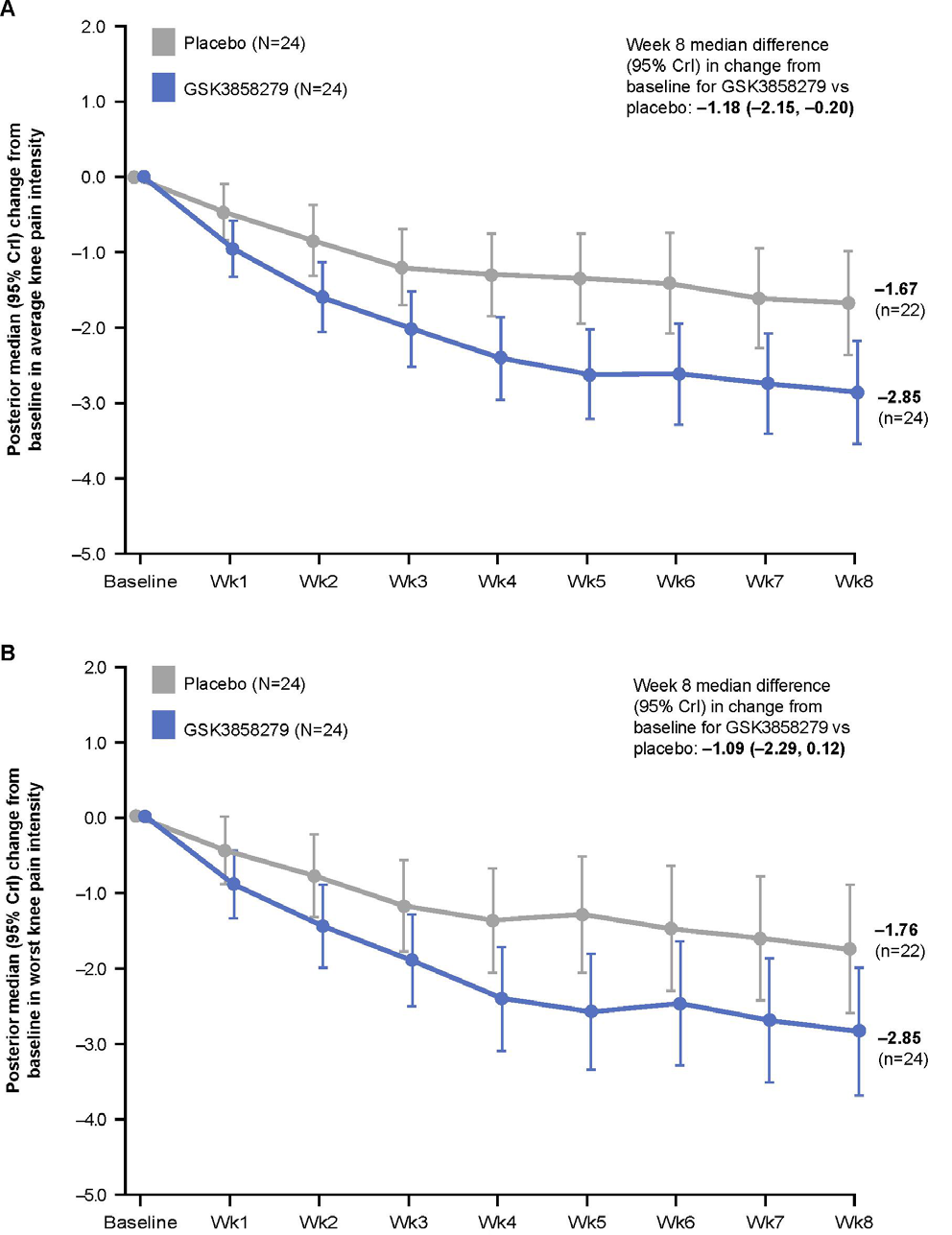
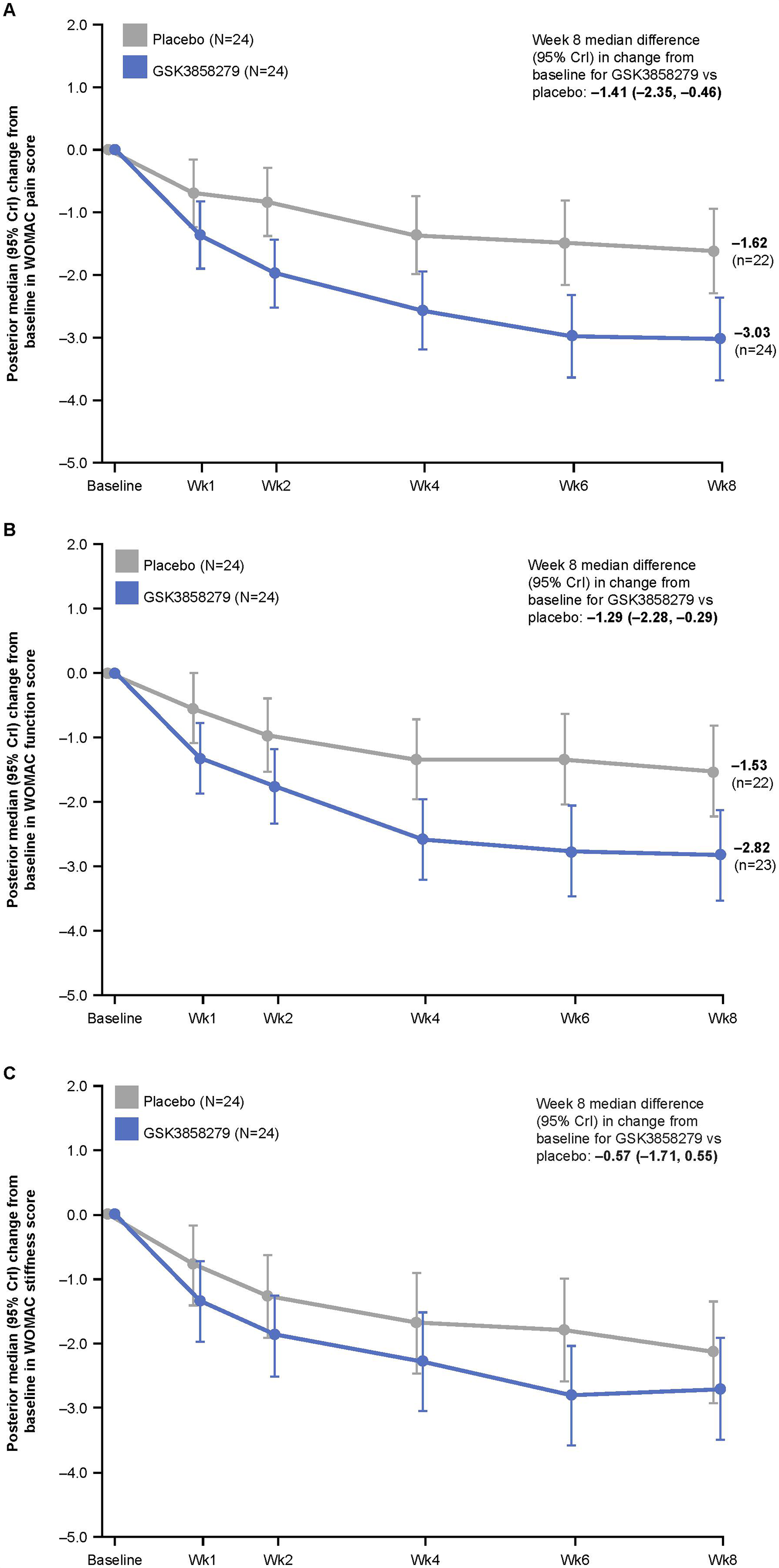
(Data source: Nijjar JS, et al. Ann Rheum Dis. 2025)
